










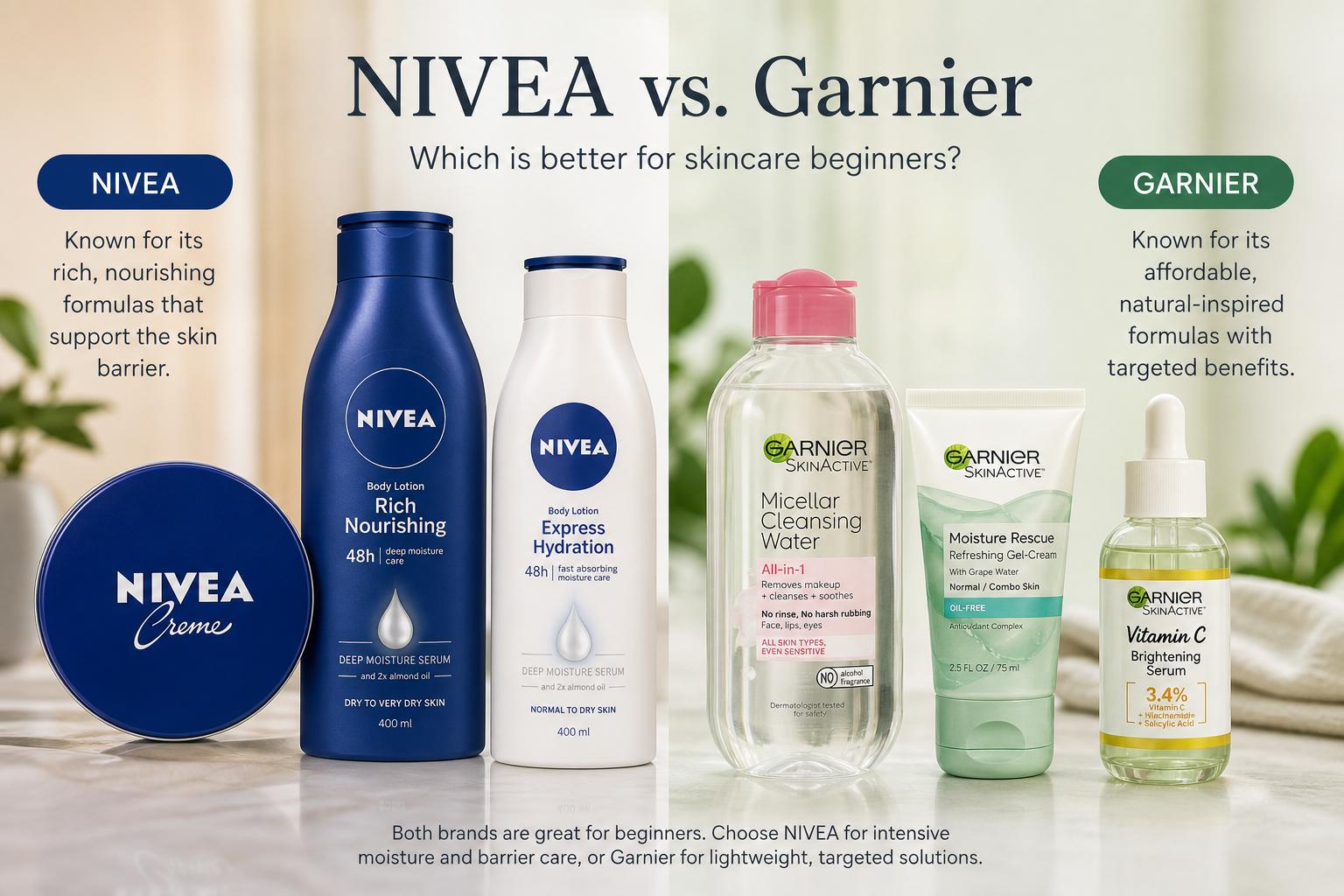
I’m a Skincare Beginner: Is Nivea a Good Starting Brand Compared to Garnier? A Practical Canadian Guide
You’ve decided to finally take care of your skin, and you’re standing in front of the drugstore shelf at Shoppers, Walmart, or London Drugs. Rows of cleansers, creams, and micellar waters stare back. Familiar names pop up: Nivea and Garnier. If you’re thinking, “I’m a skincare beginner. Is Nivea a good starting brand compared to Garnier?” you’re not alone. This guide cuts through the marketing and helps you choose a sensible, affordable routine that works in Canadian weather and Canadian stores—without sending you down a rabbit hole of 20 different products.
By the end, you’ll know the true differences between Nivea and Garnier, which products make sense for a starter routine, how to adapt for winter or summer in Canada, and where to save (and where not to). You’ll also get step-by-step morning and night routines, price ranges, tips for sensitive skin, and smart ways to shop in Canada—from PC Optimum hacks to bilingual labels to Health Canada rules for SPF.
The Quick Take: Nivea vs. Garnier for Beginners in Canada
If you just want the fast answer before the deep dive, here it is:
- If you want super-simple, nourishing, and budget-friendly basics and you don’t mind fragrance: Nivea is an easy, straightforward starting point, especially for normal-to-dry skin and our cold, dry winters.
- If you want gentler cleansers, famous micellar waters, and more active-focused drugstore options (like vitamin C or hyaluronic acid) with better fragrance-free availability: Garnier is often the safer pick—especially if you’re sensitive or acne-prone.
Both brands can work. The better brand for you depends on your skin type, your tolerance for fragrance, and what you can easily find on shelves near you. Below, we’ll unpack everything—the ingredients, the price ranges in CAD, the best starter routines for each brand, and what’s easiest to stick with every day.
How to Think Like a Beginner (in Canada)
Skincare doesn’t need to be complicated or expensive, especially when you’re just starting. Build around three pillars:
- Cleanse (gently, once or twice daily)
- Moisturize (match texture to your skin type and the season)
- Protect with SPF in the morning (every day you see daylight—yes, even in winter)
In a Canadian context, a few extra realities matter:
- Climate swing: Dry indoor heat and wind in winter; humidity or wildfire smoke in summer. You may need heavier creams in January and lighter gels by July.
- Availability: Shoppers Drug Mart/Pharmaprix, Walmart Canada, London Drugs, Rexall, Jean Coutu, and grocery chains carry Nivea and Garnier widely. Local selection varies by province and by store size.
- Labels and language: Products in Canada use bilingual English/French labels and INCI ingredient lists. Always check the exact Canadian label because formulas can differ from US or EU versions.
- SPF rules: Sunscreens are regulated by Health Canada, and approved products display an authorization number (DIN or NPN). Look for “Broad Spectrum” and SPF 30 or higher. Don’t assume a US or EU bestseller is sold—or legal—the same way here.
The goal: build a routine you’ll actually follow. That means fewer steps, affordable options you can find near home, and products that feel good enough that you’ll use them daily.
Brand Overviews: What Are You Really Getting with Nivea and Garnier?
Nivea in Canada: Classic, Nourishing, Straightforward
Nivea (by Beiersdorf) has been a drugstore staple for decades. In Canada you’ll easily find Nivea Creme (the iconic blue tin), Nivea Soft (a lighter cream), everyday cleansers, body care, and Nivea Men lines. The brand tends to favour rich emollients and occlusives (think mineral oil, petrolatum, glycerin) and familiar ingredients like panthenol and Q10. Textures are usually comforting, which is useful during a Canadian January when your face feels like it has seen the prairies’ winds.
Potential downsides for beginners: a lot of Nivea’s facial products are fragranced, and some classic creams are heavy for oily or acne-prone skin. If you’re sensitive to fragrance, you’ll need to hunt for “sensitive” or “fragrance-free” variants and confirm on the label. Still, the brand’s simplicity and price make it attractive for a foundational routine if you prefer a no-fuss path.
Garnier in Canada: Gentle Cleansing, Micellar Mastery, and Entry-Level Actives
Garnier (under L’Oréal) is known for SkinActive micellar waters, hydrating gel-creams, and accessible “active” formulas (vitamin C, hyaluronic acid, and sometimes niacinamide in select products). Their micellar water is a Canadian drugstore legend for removing sunscreen and makeup without stripping. Garnier typically offers more fragrance-free options in cleansing and micellar lines than Nivea, which is valuable if you have reactive skin or you’re patch-testing your way into skincare.
Potential downsides: not every “active” product is strong enough to deliver dramatic results, and some moisturizers include fragrance or alcohol denat. Always read the INCI list and manage expectations. For everyday basics—especially cleansers—Garnier is tough to beat for beginners who want mild and affordable.
Ethics Snapshot: Animal Testing and the New Canadian Landscape
In 2023, Canada moved to ban cosmetic animal testing and the sale of cosmetics relying on animal testing data, aligning with global shifts. This is excellent news for Canadian consumers. That said, cruelty-free designations can still vary by brand based on global policies and third-party certifications.
- Garnier has Leaping Bunny certification internationally, a plus for cruelty-free shoppers.
- Nivea states it does not test on animals except when required by law; it is not currently Leaping Bunny certified.
If cruelty-free status matters to you, Garnier generally has the clearer third-party certification. For both brands, what you buy in Canada must meet Health Canada’s regulations.
Ingredient Philosophy: What You Should Know Before You Buy
Fragrance: Comfort to Some, Irritant to Others
Fragrance is common in both Nivea and Garnier products. For many people it’s fine; for some, especially with rosacea, eczema, or very reactive skin, fragrance can be a trigger. In Canada, you’ll usually see “parfum/fragrance” in the INCI list—individual fragrance components aren’t typically broken out the way the EU sometimes requires. If you’re sensitive, prioritize “fragrance-free” (not just “unscented”). Garnier’s micellar range has reliable fragrance-free options; Nivea’s sensitive lines sometimes are, but verify on the label.
Moisturizing Backbone: Glycerin, Petrolatum, Mineral Oil, and Friends
Both brands rely on proven moisturizers: glycerin (a humectant), petrolatum and mineral oil (occlusives), and various plant oils or fatty alcohols to soften skin. Nivea Creme is legendary for heavy-duty occlusion, which reduces transepidermal water loss—fantastic in -20°C windchill, less ideal during a humid Montreal summer. Garnier leans into lightweight gel textures with hyaluronic acid for hydration, often better for oily-combination skin or summer months.
Actives: Vitamin C, Niacinamide, and Hyaluronic Acid
At the drugstore level, Garnier tends to showcase “actives” more visibly. You’ll see vitamin C serums, hyaluronic acid gel-creams, and some niacinamide across ranges. Nivea has targeted lines like Q10 (ubiquinone) and dark-spot formulas such as those with proprietary brightening blends. For beginners, the best “active” is the one you can use consistently without irritation. Don’t chase high percentages; look for gentle, well-rounded formulas and patch test first.
What a Sensible Beginner Routine Looks Like (AM/PM)
Keep it to three steps to start. You can always add a serum later.
Morning (AM)
- Cleanse lightly or rinse with lukewarm water if you woke up clean and your skin isn’t oily. If you need a cleanser, pick a gentle one.
- Moisturize. Lightweight gel for oily/combination; cream for normal/dry; richer cream for winter or very dry.
- Apply SPF 30+ broad-spectrum. This is non-negotiable if you want results from any routine, especially for uneven tone and anti-aging.
Evening (PM)
- Remove sunscreen/makeup with micellar water or a gentle cleanser. If you wore heavy makeup or water-resistant sunscreen, micellar first, then a gentle cleanse (“double cleanse”).
- Moisturize. Choose texture based on how your skin feels after cleansing.
- Optional: Add one simple serum (e.g., a mild hyaluronic acid or niacinamide), but only after your routine is otherwise stable and irritation-free.
Once your skin is happy for a few weeks, consider introducing one targeted active if you have a clear concern (like a gentle vitamin C in the morning for brightness).
Nivea vs. Garnier: Best Starters by Category
Exact formulas and names can change, so always read the Canadian label. Price ranges below reflect common retail pricing in Canada before sales and may vary by province and store.
| Category | Starter Pick (Nivea) | Starter Pick (Garnier) | Approx. Price (CAD) | Fragrance-Free Option? | Canadian Notes |
|---|---|---|---|---|---|
| Micellar Water | Nivea Micellair (Sensitive) – check for “fragrance-free” | Garnier SkinActive Micellar Water (Pink cap, All-in-1) | $9–$15 (400 mL) | Often yes (Garnier pink is typically fragrance-free) | Great for removing sunscreen; Garnier widely available at Shoppers/Walmart |
| Gel Cleanser | Nivea Gentle or Refreshing Face Wash (check label for sulfates/fragrance) | Garnier SkinActive Gentle Cleanser (look for “sulfate-free”) | $8–$15 | Varies by SKU | Go mild—Canadian winters punish over-cleansing |
| Light Moisturizer | Nivea Soft (lighter than classic Creme) | Garnier Moisture Bomb Gel-Cream (hydrating, light) | $9–$25 | Usually fragranced; check | Nivea Soft fits winter layering; Garnier gel suits humid summers |
| Rich Moisturizer | Nivea Creme (blue tin) for very dry skin or winter nights | Garnier richer creams (read labels; look for ceramides/niacinamide) | $7–$18 (Nivea Creme sizes vary) | Usually fragranced | Nivea Creme is heavy—use sparingly if acne-prone |
| Vitamin C/“Brightening” | Nivea targeted brightening lines (check INCI; fragranced) | Garnier Vitamin C serums (verify derivative and alcohol content) | $18–$35 | Varies; often fragranced | Patch test; don’t expect overnight miracles |
| Sunscreen (Face) | Nivea’s SPF selection varies in Canada | Garnier’s SPF selection also varies in Canada | $14–$30+ | N/A | Look for Health Canada approved SPF (DIN or NPN). Consider alternatives like Ombrelle, La Roche-Posay, Neutrogena if selection is limited |
Building a Beginner Routine with Nivea
For Normal to Dry Skin
AM: Gentle cleanse (or rinse), Nivea Soft as a daytime moisturizer, then a separate broad-spectrum SPF 30+ approved by Health Canada.
PM: Micellar water to remove sunscreen/makeup, then a gentle cleanser only if needed, followed by Nivea Soft. On biting-cold nights or if your cheeks feel tight, a pea-sized layer of Nivea Creme over Nivea Soft can seal in moisture. Start small to avoid clogged pores.
For Oily to Combination Skin
AM: Lightweight cleanse (or splash), a thin layer of a lighter Nivea moisturizer (Nivea Soft works; use sparingly), then SPF. If Soft still feels greasy, consider a gel-based moisturizer from another drugstore line until you find the right Nivea texture for your skin.
PM: Micellar water to remove sunscreen, then a mild cleanse. Spot-apply Nivea Soft only where you’re dry. Skip heavy occlusives if you’re acne-prone.
For Sensitive Skin
AM/PM: Seek Nivea products labelled for “sensitive” or “fragrance-free”—read the exact Canadian label to confirm. If in doubt, keep Nivea to body care and pick a truly fragrance-free facial cleanser and moisturizer from another drugstore brand while you learn what your skin tolerates.
Building a Beginner Routine with Garnier
For Normal to Dry Skin
AM: Gentle cleanse or water rinse, then a hydrating moisturizer (Garnier gel-creams are light; you may need to layer more in winter). SPF 30+ as your last step.
PM: Garnier Micellar Water (pink cap) to take off the day. Follow with a mild cleanser if you wore heavy makeup. Apply a hydrating cream; add a drop of a more occlusive cream on cheeks or around the nose if heating dries you out.
For Oily to Combination Skin
AM: Light cleanse, then a gel-cream with hyaluronic acid. SPF 30+ to finish. If you want to experiment later, a gentle niacinamide serum can help with oiliness—add only after your basic routine is stable.
PM: Micellar water to remove sunscreen, then gentle cleanse. Apply a lightweight moisturizer; avoid layering multiple “actives” until you know your tolerance.
For Sensitive Skin
AM/PM: Garnier Micellar Water (pink cap) is a common go-to because it’s usually fragrance-free and very mild. Follow with the gentlest, fragrance-free Garnier moisturizer you can find—or pair micellar with a fragrance-free moisturizer from another brand if needed. Always patch test on the jawline before full-face use.
Canadian Climate Checklist: Adjusting for Season
January in Winnipeg is not July in Halifax. Adapt your routine as the weather turns:
- Winter: Humidify your indoor air if possible. Use richer textures (Nivea Creme sparingly over a lighter base; Garnier gel-cream layered under a thicker night cream). Reduce foamy or stripping cleansers. Don’t skip SPF—snow glare can amplify UV exposure.
- Summer: Swap to lighter gels. Cleanse sweat and sunscreen thoroughly at night (micellar + gentle wash). SPF 30+ every day; reapply if outdoors, especially around cottage country or on patios.
- Shoulder seasons: Watch for sudden dryness when the heat switches on in fall. Add occlusion at night before flakes show up.
Shelf Reality: What You’ll Actually Find in Canadian Stores
In most mid-to-large Canadian cities, you’ll find both brands at Shoppers Drug Mart/Pharmaprix, Walmart Canada, London Drugs (West), Jean Coutu (Quebec), Rexall, and large Loblaws/Real Canadian Superstore locations. Prices vary regionally and with promotions:
- Micellar waters: $9–$15 for 400 mL (often 20%–40% off during monthly sales)
- Cleansers: $8–$15
- Moisturizers: $9–$25 (actives/serums: $18–$35)
- SPF: $14–$30+ depending on brand and format
Smart shopping tips:
- PC Optimum: Shoppers runs frequent points events. Watch for “20x the points” or personalized offers in the app for Garnier or Nivea.
- Price matching: Some Walmarts and London Drugs may match local ads—bring proof on your phone.
- Warehouse clubs: Costco occasionally carries large-pack micellar waters or multi-packs at strong value.
- Returns: Many Canadian drugstores accept returns on lightly used cosmetics/skin care within a set window—check store policy; keep receipts.
Safety and Rules: The Canadian Regulatory Basics You Should Know
Skincare is regulated by Health Canada. A few need-to-know points for beginners:
- Sunscreens are regulated and must be authorized for sale, typically indicated by a DIN (Drug Identification Number) or sometimes NPN. Look for “Broad Spectrum” and use SPF 30 or higher daily.
- Labels follow INCI (International Nomenclature of Cosmetic Ingredients). Ingredients appear in descending order of concentration (after 1% they can be in any order).
- Health Canada maintains a Cosmetic Ingredient Hotlist—some ingredients are restricted or not permitted. Buying from reputable retailers reduces risk.
- Canadian products are labeled in English and French. Don’t assume a US TikTok favourite has the same formula here; check the Canadian label.
Choosing Between Nivea and Garnier by Skin Type and Concern
Dry/Dehydrated Skin
Consider Nivea if you need heavier occlusion in winter (Nivea Soft or a tiny amount of Nivea Creme over a hydrating layer). Garnier’s hyaluronic-centric gels help daytime comfort without greasiness. In -15°C wind, you may even use Garnier gel-cream first and a thin veil of Nivea Creme on top before heading out.
Oily/Acne-Prone Skin
Garnier typically offers milder, lighter-feeling textures and fragrance-free micellar waters that won’t clog pores. Use a gentle cleanser and a gel-cream; keep Nivea’s heavier creams for occasional dry patches only. If you want a brightening vitamin C later, patch test and start slow—oily skin can still be sensitive.
Sensitive/Reactive Skin
Lean Garnier for fragrance-free cleansing (pink-cap micellar). For moisturizers, scout the label for “fragrance-free” and short, simple ingredient lists. Some of Nivea’s “sensitive” items may suit you, but many Nivea facial creams are fragranced. Always patch test.
Uneven Tone/Spots
Daily SPF 30+ is your first line. For beginners, a gentle vitamin C derivative or niacinamide can help with brightness over time. Garnier often has clearer vitamin C entries on shelves; Nivea has targeted brightening lines as well. Don’t expect dramatic changes fast—consistency and sun protection matter far more.
Pros and Cons at a Glance
| Brand | Pros | Cons |
|---|---|---|
| Nivea |
|
|
| Garnier |
|
|
Starter Shopping Lists Under $30, $60, and $90 (Canada)
Prices reflect common Canadian ranges; watch for sales.
Under $30 (Bare-Bones)
- Garnier Micellar Water (pink cap, 400 mL): $10–$15
- Basic moisturizer: Nivea Soft or a simple Garnier gel-cream: $9–$15
Use micellar at night; rinse in the morning and reapply moisturizer. Add SPF when budget allows—it’s essential.
Under $60 (Complete Basics)
- Gentle cleanser (Garnier SkinActive or mild Nivea): $8–$15
- Micellar water (Garnier pink): $10–$15
- Moisturizer (Nivea Soft for dry or Garnier gel-cream for oily): $9–$20
- SPF 30+ broad spectrum (consider Ombrelle, La Roche-Posay Anthelios, Neutrogena, or Coppertone): $14–$30+
Under $90 (Add a Gentle Active)
- Keep the $60 bundle
- Add one simple active: a hydrating serum or mild vitamin C from Garnier: $18–$35
Start the active every other day and watch for irritation before going daily.
Micellar Water vs. Cleanser: Do You Need Both?
Short answer: Not always, but often yes if you wear sunscreen or makeup. Micellar water is excellent as a first step to loosen sunscreen, mascara, or foundation without scrubbing. A gentle gel cleanser afterward ensures residue is gone. On barefaced mornings, a water rinse may be enough. Garnier shines here, with a micellar that’s affordable and gentle; Nivea’s micellars can work too—just check the label for fragrance or oils if you’re sensitive.
Patch Testing and Avoiding Irritation
Even drugstore staples can irritate. Do a quick test:
- Apply a small amount on the jawline or behind the ear once daily for 3–4 days.
- Watch for redness, stinging, or bumps that persist beyond a brief tingle.
- If it’s fine, proceed to full-face use. If not, return or repurpose as a body product.
With actives like vitamin C, go slow. One new product at a time, at least three days apart. Your future self will thank you for fewer surprises.
Common Beginner Mistakes (and How Nivea or Garnier Can Help You Avoid Them)
- Over-cleansing: Squeaky-clean is not the goal. Use Garnier micellar + a mild cleanser, or a very gentle Nivea face wash. Your barrier will be happier.
- Skipping SPF: No SPF, no meaningful long-term results. In Canada, look for an approved SPF with DIN or NPN. If Nivea or Garnier options are limited locally, grab an easy drugstore SPF and use it daily.
- Layering too much: Keep it to cleanser, moisturizer, SPF. Add only one more step once the basics are fully comfortable.
- Using heavy creams all over oily skin: Nivea Creme is powerful but not for everyone’s entire face. Spot use on cheeks or around the nose in winter; stick to lighter textures elsewhere.
- Chasing percentages: A well-formulated gentle serum used every day beats a harsh one you can’t tolerate.
Ethics, Sustainability, and Recycling in a Canadian Context
Packaging sustainability can be confusing. General guidance:
- Check your municipality’s recycling rules—Toronto, Vancouver, Calgary, Montreal, and Halifax each differ on pumps and mixed materials.
- Rinse bottles and remove pumps where requested by your city’s blue bin program.
- Some retailers in Canada partner with beauty recycling programs for hard-to-recycle items. Ask at Shoppers Beauty Boutique or specialty stores if they have in-store drop-off bins.
- Garnier promotes a “Green Beauty” initiative globally; always verify Canadian program details and drop-offs in your area.
If cruelty-free is a priority, Garnier’s Leaping Bunny certification is a clear plus. Nivea is not Leaping Bunny certified at this time. In Canada, animal testing for cosmetics has been addressed through recent legislative changes, improving the ethical baseline for what’s sold domestically.
Is It Better to Start with Nivea or Garnier? A Decision Guide
- If you’re sensitive to fragrance or easily irritated: Garnier (especially micellar and the gentlest cleansers).
- If you’re dry and need affordable richness in winter: Nivea (Nivea Soft as your main; Nivea Creme sparingly as a night seal).
- If you love the idea of a one-brand routine: Garnier is stronger at cleansing; Nivea is stronger at classic moisturization. Mix if needed.
- If you want entry-level actives: Garnier typically has clearer vitamin C and hyaluronic offerings on shelves.
- If you want ultra-simple/no-fuss: Nivea’s straightforward creams and washes are easy to understand and use.
There’s no one “best” brand. The winning routine is the one you can follow every single day. In practice, many Canadians mix: Garnier micellar + a Nivea moisturizer + a separate sunscreen from a third brand.
Real-World Canadian Examples
Example 1: Toronto Desk Job, Dry Winter Office Air
AM: Rinse, Nivea Soft, SPF 30+ (Ombrelle or La Roche-Posay). PM: Garnier Micellar (pink), gentle cleanser, thin layer of Nivea Soft; add a pea-sized Nivea Creme to cheeks if tight. Weekly: Hydrating sheet mask if you enjoy them (not necessary, but nice).
Example 2: Vancouver Student, Oily Skin, Bikes to Class
AM: Light cleanse, Garnier gel-cream, SPF 30+. PM: Micellar water, gentle cleanser, light moisturizer. Consider a mild niacinamide serum later for oiliness. Reapply SPF if outdoors for long rides—travel stick or fluid in the backpack.
Example 3: Montreal Parent, Sensitive Skin, No Time
AM: Splash water, fragrance-free moisturizer, SPF 30+. PM: Garnier Micellar (pink), fragrance-free moisturizer. Keep it minimal and consistent. Add actives only after a month of zero irritation.
Troubleshooting: If Your Skin Reacts
- Redness or stinging: Stop the newest product first. Revert to micellar + bland moisturizer for 3–5 days.
- Breakouts: Cut heavy occlusives (e.g., Nivea Creme) on acne-prone areas. Confirm your cleanser isn’t too harsh; paradoxically, stripping can worsen oiliness.
- Flakes in winter: Increase moisturizer quantity or layer a richer cream at night. Add a humidifier if you can.
- Persistent issues: See a Canadian family doctor or dermatologist; some conditions (rosacea, eczema, severe acne) need medical care.
Budgeting and Finding Deals in Canada
- Rotate by season: Use a lighter Gel-Cream in summer and a richer Cream in winter rather than buying five jars at once.
- Watch for brand cycles: Garnier micellar and Nivea moisturizers frequently go on sale. Sign up for flyers (Flipp app helps compare).
- Points boosts: PC Optimum events at Shoppers can net free products down the line. If you’re starting out, buy during 20x points weekends.
Frequently Asked Questions
“I’m a skincare beginner. Is Nivea a good starting brand compared to Garnier?”
Yes—both are solid places to start for Canadians. Choose Nivea if you want simple, nourishing moisturizers and don’t mind fragrance. Choose Garnier if you want very gentle cleansing (especially micellar water) and easier access to fragrance-free options and entry-level actives. Many people mix: Garnier micellar + Nivea moisturizer + a third-party sunscreen.
Do I need both micellar water and a cleanser?
If you wear sunscreen or makeup, using micellar first and then a gentle cleanser is ideal at night. On no-makeup mornings, you can rinse with lukewarm water or use a small amount of a mild cleanser. Garnier’s pink-cap micellar is a popular, gentle first step.
Which brand is better for sensitive skin?
Garnier typically offers more fragrance-free cleansing options, which helps if your skin is reactive. That said, always check the exact Canadian label and patch test. Some Nivea “sensitive” lines can work too, but many Nivea facial creams are fragranced.
What about sunscreens from Nivea or Garnier in Canada?
Availability varies. Not every EU/US product exists here. In Canada, look for an SPF with a Health Canada authorization (DIN or NPN) and “broad spectrum.” If you can’t find an SPF from Nivea or Garnier locally, use accessible alternatives like Ombrelle, Neutrogena, Coppertone, or La Roche-Posay. The best SPF is the one you’ll wear every day.
Is Nivea Creme safe for the face?
Yes for many people, but it’s very occlusive and fragranced. Great for very dry patches or winter nights, but it can be too heavy and comedogenic for acne-prone or oily skin. Start with a pea-sized amount on dry areas only.
Is Garnier cruelty-free in Canada? What about Nivea?
Garnier has Leaping Bunny certification globally. Nivea is not currently Leaping Bunny certified. Canada’s recent move to ban cosmetic animal testing is positive overall, but certification differences remain for shoppers who prioritize cruelty-free.
How much should I spend as a beginner?
You can assemble a full routine for under $60 in Canada: gentle cleanser ($8–$15), micellar ($10–$15), moisturizer ($9–$20), and SPF ($14–$30+). Start small and buy during sales. Consistency matters more than price.
Can I build a routine with just Nivea or just Garnier?
Yes, but it’s often easier to mix. Garnier for cleansing, Nivea for moisturizers, and an SPF from whichever brand fits you best in Canadian stores. If you prefer a one-brand approach, be flexible about textures across seasons.
How do I know if a product is fragrance-free?
Check the INCI list for “parfum/fragrance.” “Unscented” can still include masking fragrances. Look for “fragrance-free” and verify by scanning the ingredients. Garnier’s pink-cap micellar is a common fragrance-free option; Nivea has some sensitive variants—confirm on the label.
What if I have rosacea or eczema?
Keep it extra simple: a very gentle cleanser or micellar, a bland fragrance-free moisturizer, and SPF 30+. Avoid fragrance and strong actives at first. If symptoms persist, talk to a Canadian healthcare professional; you may need prescription care.
Bottom Line: Start Simple, Stay Consistent, Adjust for Canada
Nivea and Garnier both offer beginner-friendly, budget-conscious options across Canada. If you crave rich comfort and minimal fuss, Nivea is a perfectly fine starting brand—just watch for fragrance and go easy with the heavier creams. If you want gentle cleansing and easier fragrance-free finds, Garnier has the edge, especially with its micellar water and lightweight hydrators. Build a three-step routine—cleanse, moisturize, protect—then adapt month by month to our climate. Your skin doesn’t need a dozen products; it needs a routine you’ll actually keep.