








The Complete Canadian Guide to Choosing the Perfect Ottoman: Styles, Sizes, Materials, and Smart Buys
It’s the humble multitasker that rarely gets the spotlight: the ottoman. In Canadian homes where square footage is precious and winters invite long, cozy evenings, an ottoman can moonlight as a coffee table, hide board games, prop up tired feet, or offer an extra seat for guests. The right one feels effortless. The wrong one clutters your living room, wobbles on hardwood, and never quite matches your sofa. This guide will help you choose with confidence.
Below, you’ll find everything you need to know—what an ottoman is (and isn’t), the best types for condos and family homes, how to nail proportions, which materials actually last, where to shop in Canada at different price points, care tips for our climate, smart sustainability moves, and practical buying checklists. Whether you want a small pouf for a reading nook or a large storage ottoman that anchors a living room, you’ll walk away ready to buy once and buy right.
What Exactly Is an Ottoman (and Why Does It Matter)?
An ottoman is a low, upholstered piece of furniture designed primarily as a footrest or occasional seating. But that’s just the start. Today’s designs include storage ottomans with hinged lids, oversized cocktail ottomans that replace coffee tables, tidy ottoman benches for entryways, and poufs (firm, often spherical or cube-shaped, and lightweight).
What it is not: a rigid coffee table (unless you add a tray), a full seat designed for long sessions (ergonomically, most ottomans lack back support), or a miracle storage chest that can swallow a closet’s worth of clutter. Treat it as a versatile accent with clear jobs: elevate legs, double as a table, hide the mess fast, or supply a perch when friends drop by.
You’ll also hear related terms. A “pouf” often means a soft, structured floor cushion with dense fill. A “footstool” is typically smaller, firmer, and sometimes un-upholstered. An “ottoman coffee table” or “cocktail ottoman” is a larger, often tufted, rectangular or square ottoman scaled to sit in front of a sofa and handle trays, mugs, and snacks.
The Main Ottoman Types (and When to Choose Each)
Storage Ottoman: The Condo’s Best Friend
If you live in a Toronto condo, a Calgary townhouse, or any home where closets are at a premium, a storage ottoman earns its keep. Look for a sturdy frame and a hinged top—ideally with soft-close or slow-close hardware so fingers don’t get pinched. Rectangular models offer the most capacity; round versions soften the look of tight rooms and prevent shin bumps.
Good uses: winter gear in an entryway, throw blankets and board games in the living room, or kids’ toys in a family room. Before buying, check interior dimensions, not just external size. Two ottomans with the same footprint can have very different storage volumes due to frame thickness and foam depth.
Cocktail or Coffee Table Ottoman: Central and Stylish
A cocktail ottoman anchors a seating area the way a coffee table does, but offers softer edges and a cozier vibe. Pair it with a stable tray for drinks and remotes. Look for firm foam so objects don’t wobble. If you like to play cards or assemble puzzles, a firm “tight top” (no pillow-top) is more practical than a deep cushiony surface.
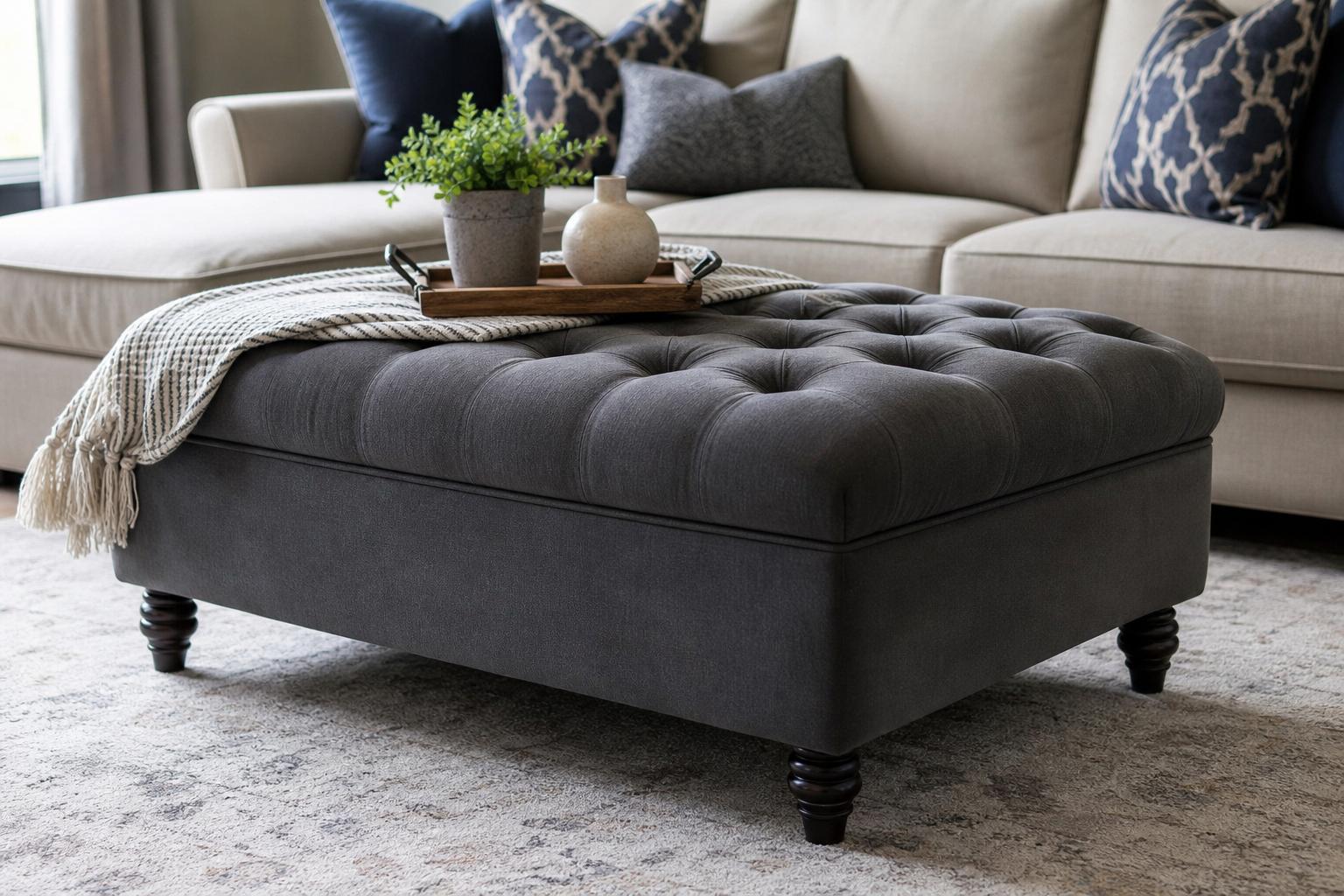
Tip: In family rooms, choose performance fabric or leather for easy wipe-downs. In formal living rooms, tufted velvet or linen blends add texture and elegance. Just remember: tufting collects crumbs more than a smooth top will.
Ottoman Bench: Long Lines, Many Jobs
An ottoman bench is elongated and typically sits at the foot of a bed, along a hallway wall, or beside a dining table for flexible seating. The best designs balance seat firmness with comfort and may include a shelf or hidden storage. In small condos, a slim bench with casters can slide under a console or window for an extra seat without visual bulk.
Poufs and Floor Cushions: Light, Fun, Portable
Poufs are easy to move and great for casual seating. They’re particularly useful in kids’ rooms, reading corners, or as an occasional footrest in a tight living room. Leather poufs (often Moroccan-inspired) age beautifully and resist stains; knitted poufs look inviting but can snag with pets.
Because poufs are lower to the ground, they’re not ideal for older adults or anyone with knee issues. If that’s a concern, keep at least one taller footrest or ottoman on hand.
Modular and Sectional Ottomans: Flexible by Design
Modular ottomans are built to shift with your life. With a sectional sofa, a matching rectangular ottoman turns a chaise into a sprawling lounge. Some Canadian modular sofa brands design ottomans to lock in or pull away depending on whether you want movie-night sprawl or party flow. If you like to rearrange seasonally—or your living room doubles as a playroom—modular pieces pay off.
Outdoor Ottoman: Built for Weather Swings
On a balcony in Vancouver or a deck in Halifax, an outdoor ottoman extends your lounge seating and doubles as a side table. Look for UV-resistant performance fabrics (Sunbrella is a common brand) and quick-dry foam. Powder-coated aluminum frames and marine-grade plywood resist rust and rot. Always bring cushions in or use a tight-fitting, ventilated cover; Canadian freeze-thaw cycles are hard on everything.
Sleeper Ottoman: A Clever Guest Solution
A sleeper ottoman folds out to reveal a cot-size mattress—handy for overnight guests in a studio or small den. They’re heavier and costlier than standard ottomans due to the mechanism and mattress. Test the fold-out before buying if possible, and measure doorways and elevators; condo deliveries hate surprises.
Get the Size Right: Proportion, Clearance, and Shape
Good rooms feel easy to move through. An ottoman should serve the seating, not interrupt it. Here’s how to size it correctly.
Height: Match the Seat, Then Go a Touch Lower
As a footrest, an ottoman works best when it’s roughly the same height as your sofa seat, or 2–5 cm (1–2 inches) lower. Most sofa seats land around 43–48 cm high (17–19 inches), so a typical ottoman height will be 38–46 cm (15–18 inches). Taller benches can be 48–51 cm (19–20 inches) if used primarily for seating.
If you’ll use it as a coffee table, err slightly lower to maintain visual flow and an easy reach. If knee comfort is the priority, go level with the seat or just a hair higher for less strain standing up.
Length and Width: Balance the Sofa
As a center piece in front of a standard sofa, aim for an ottoman about two-thirds the width of the sofa. That usually lands between 90–120 cm (36–48 inches) wide for a three-seater. Depth should allow comfortable leg reach without cramping circulation—often 50–80 cm (20–32 inches), depending on your sofa’s seat depth.
For sectionals, rectangular or square ottomans that mirror the scale of the longest side look best. If you want easy circulation, consider two smaller squares you can separate for parties.
Clearance and Traffic Flow
Leave about 35–45 cm (14–18 inches) between the sofa and ottoman for legroom. Keep 60–90 cm (24–36 inches) of walking space in main pathways. In condos, that might shrink to 50–60 cm; test with painter’s tape on the floor before buying. It’s easier than wrestling a return down the elevator.
Round vs. Square vs. Rectangular
Round ottomans soften sharp rooms and are friendly in tight corners—great where you want to minimize stubbed toes. Squares offer a more tailored, modern feel, especially with tufting. Rectangular ottomans are the most coffee-table-like and usually fit best with standard sofas and sectionals.
Quick Sizing Reference
| Sofa/Seating | Recommended Ottoman Size | Notes |
|---|---|---|
| Loveseat (140–170 cm wide) | 80–100 cm wide; 50–60 cm deep; 38–43 cm high | Round or small rectangle keeps room open |
| Standard 3-seater (180–220 cm wide) | 100–120 cm wide; 60–80 cm deep; 38–46 cm high | Two-thirds the sofa width is a good rule |
| Large sofa/sectional | 120–150 cm wide; 80–100 cm deep; 38–46 cm high | Consider modular pairs for flexibility |
| Accent chair | 45–60 cm wide; 45–55 cm deep; 38–43 cm high | Match chair seat height for comfort |
Materials and Construction: What Actually Lasts
Two ottomans can look identical online yet perform very differently. Materials, joinery, foam density, and fabric quality decide whether you love your ottoman for years or babysit a wobbly eyesore.
Frames and Joinery
Look for hardwood frames (maple, birch, oak) or high-quality plywood with multiple cross-laminated layers. Avoid thin, knotty softwoods and visible MDF at stress points. Corner blocks glued and screwed add strength. If the ottoman has storage, inspect the bottom panel—thick plywood beats thin fiberboard that can bow with weight.
Foam, Fill, and Firmness
Ottoman tops should be firm enough for a tray yet comfortable for feet. High-resilience polyurethane foam in the 1.8–2.5 lb/ft³ density range is common; higher densities generally last longer. Some tops add a fiber wrap (Dacron) to soften edges. Down or feather blends feel plush but compress quickly and are trickier for balancing a tray. When in doubt, choose a tight-top construction for multi-use rooms.
Upholstery Fabrics: Pros and Cons
- Polyester/microfiber: Durable, stain-resistant, budget-friendly. Great for family rooms and rentals.
- Cotton/linen blends: Breathable and natural-looking; may wrinkle or absorb spills more readily. Choose performance-treated versions if you entertain.
- Wool blends: Cozy, resilient, naturally stain-resistant to a point. Usually a pricier, premium look with good longevity.
- Velvet: Lush and dramatic. Polyester velvet resists crushing better than rayon or silk. Expect to brush or steam for the best look.
- Leather: Ages beautifully, easy to wipe, and strong. Protected (pigmented) leather is most family-friendly; aniline looks richer but stains easily.
- Faux leather: Affordable and vegan-friendly, but quality varies. Look for thicker, soft-touch varieties; thin PU can crack over time.
- Performance fabrics: Brands like Crypton, Aquaclean, or Sunbrella (indoor/outdoor) offer superior stain and fade resistance. Excellent for high-traffic spaces.
Legs, Casters, and Floor Protection
Short block legs feel modern; turned wood legs read traditional. Casters make moving an ottoman easy but can dent softwood floors; choose rubberized or high-quality metal casters and add felt pads beneath. On rugs, low-profile glides prevent snagging. If you have radiant heat, ensure leg material tolerates warmth without warping.
Hinges and Hardware for Storage
Soft-close or slow-close hinges are worth the extra cost—safer for kids, kinder to fingers. Full-length piano hinges distribute weight evenly. Check the lift: a lid that stays open without propping earns daily gratitude.
Safety and Flammability Notes (Canada)
Canada does not currently have one uniform federal flammability standard for upholstered furniture like some jurisdictions do, though many manufacturers follow voluntary standards such as California TB117-2013, which can be met without added flame retardants. Always review the product details and any Health Canada advisories, and keep upholstered pieces a safe distance from heaters, fireplaces, and space heaters. For homes with kids, choose ottomans with soft edges and slow-close hardware; avoid heavy lift-up lids without supportive hinges.
Style Guide: Make It Look Intentional
A well-chosen ottoman ties a room together. A random one looks like it wandered in from another house. Start with your sofa’s style and the room’s mood, then layer texture and colour.
Colour and Pattern
Neutral ottomans—greys, camel, taupe, oatmeal—work almost anywhere and let you swap pillows seasonally. If your living room needs energy, try a patterned fabric: subtle herringbone for texture, small checks for a tailored vibe, or a flatweave stripe in coastal homes. In Montreal apartments with tall windows, a deep green velvet ottoman reads luxe without overpowering. In a Whistler cabin, a leather ottoman warms up stone and timber beautifully.
Texture and Details
Tufting (buttons or stitched squares) adds depth and can make an ottoman double as a statement coffee table. Piping outlines the form for a crisp finish. Channeling looks modern and plush. Nailhead trim leans classic, best with leather or tight-woven fabrics. If pets rule the house, skip heavy tufting that traps hair.
Trays and Styling
If you intend to use an ottoman as a coffee table, a tray turns the cushion into a reliable surface. Choose a size that leaves a fabric border for visual balance—roughly two-thirds the ottoman width works. Add a small stack of books, a candle on a heat-safe base, and a low bowl to catch remotes. Keep it flexible: when guests need seats, lift the tray and clear the deck.
Budgeting in Canada: What to Expect to Pay
Prices vary widely across the country and by brand, materials, and where you shop. Delivery and taxes (GST/HST/PST) also matter. Here’s a grounded overview in Canadian dollars.
Price Ranges
- Entry-level ($80–$250): Simple fabric ottomans and poufs at big-box stores or IKEA. Great for dorms, rentals, or short-term use. Expect basic foam and MDF frames.
- Mid-range ($250–$700): Broad selection at retailers like Structube, Urban Barn, The Brick, Wayfair Canada, and Article. Often better frames, performance fabrics, and storage options.
- Premium ($700–$1,500+): High-quality leather, solid hardwood frames, custom fabrics. Look at EQ3, local design shops, and boutique Canadian makers.
- Custom/Designer ($1,200–$2,500+): Tailored dimensions, premium materials, Canadian-made upholstery. Ideal if you need exact sizing or a coordinated set with your sofa.
Shipping fees vary: some online retailers offer free or low-cost shipping in urban areas, while remote or Northern addresses may see surcharges. Factor in taxes: Ontario HST is 13%, many Atlantic provinces are 15%, Alberta has 5% GST only, and Quebec applies GST + QST.
Where to Shop in Canada
- IKEA Canada: Budget-friendly, wide availability, simple designs. Convenient for replacements or rentals.
- Structube and Urban Barn: Trend-focused options at mid-range prices; frequent promotions.
- Article and EQ3: Clean designs, good materials, Canadian presence, fair delivery terms.
- The Brick, Leon’s: Broad selection including large-scale ottoman coffee tables; watch for sales.
- Wayfair Canada: Extensive variety; read reviews and zoom in on specs.
- Local boutiques and upholsterers: Custom dimensions and fabrics; often the best solution for tricky rooms.
- Second-hand: Facebook Marketplace, Kijiji, Habitat for Humanity ReStore, and local consignment shops—great for solid frames ready to reupholster.
Reading Specs and Spotting Red Flags
- If the listing hides frame materials, assume MDF or softwood. Look for “hardwood” or “multi-ply plywood.”
- For storage ottomans, confirm hinge type and interior dimensions. “Decorative hinges” that don’t support the lid are a hassle.
- Beware low product weights on large pieces—they often signal thin frames. Heavier isn’t always better, but extremely light for the size is a clue.
- Check fabric content and rub count (if provided). Performance or commercial-grade upholstery often lists durability metrics.
- Scan return policies: restocking fees, return windows, and who pays for return shipping. Some Canadian retailers have generous policies, others not so much.
Small Space Strategies That Actually Work
In a 600 sq. ft. condo, everything must multitask. An ottoman shines here if you choose carefully.
Go Storage-First
Pick a storage ottoman with a firm top for tray duty. Keep a basket inside with remotes, chargers, and stray mail so the surface can stay clear. For tiny living rooms, a pair of small storage cubes beats one bulky rectangle—you can split them for guests or tuck one under a console.
Mind the Circulation
Use painter’s tape to outline your intended ottoman on the floor and simulate walking paths. If you can’t pass comfortably while someone’s seated, downsize or switch to a round ottoman to carve a smoother path.
Nesting and Rolling Options
Nesting ottomans slide under a console or desk and pop out for parties. Models with hidden casters glide easily; check for locking casters if you plan to use it as a coffee table so it stays put when you lean in.
End-of-Bed and Entryway Roles
In studios and small one-bedrooms, an ottoman bench at the foot of the bed offers extra seating and linen storage. In entryways, a slim ottoman makes winter booting simpler and keeps salt and slush by the door rather than under your coffee table.
Care and Cleaning for Canadian Homes
Snow, salt, pets, kids, and dry winters all test fabric and leather. A small routine prevents stains and keeps cushions looking new.
Know Your Cleaning Code
- W: Water-based cleaners are safe. Mild dish soap in warm water is often enough.
- S: Solvent-only. Use a dry-cleaning solvent per manufacturer directions; avoid water.
- WS: Water-based or solvent cleaners. Start with water-based and escalate if needed.
- X: Vacuum only. Professional cleaning recommended; do not use liquid cleaners.
Always blot, never rub, and test in a hidden area first. Keep a clean white cloth on hand to avoid dye transfer while blotting.
Everyday Maintenance
- Vacuum weekly with an upholstery tool to remove grit that wears fabric.
- Rotate and flip any loose pillow-top if your model allows—it evens out compression.
- Use a tray for drinks and plan for coasters, even on leather.
Seasonal Tips
Winter salt stains can creep onto entryway ottomans. For W or WS fabrics, dissolve a teaspoon of white vinegar in a cup of warm water and dab lightly, then blot with clean water and air-dry. For leather, wipe salt promptly with a damp cloth and follow with a leather conditioner when fully dry.
In dry prairie winters, leather benefits from occasional conditioning and room humidity around 40–50%. In humid summers, run a dehumidifier if you notice mustiness; moisture can encourage mildew in storage ottomans—keep interiors dry and leave the lid ajar occasionally to air out.
Pet and Kid Realities
Choose tight-weave performance fabric or protected leather if you share space with pets and children. Keep a lint brush nearby for hair. If claws are an issue, skip boucle and chunky knits that snag easily and consider a smooth top without deep tufting.
Sustainability and Health: Smarter Choices
Buying better once beats replacing often. A durable ottoman with quality materials is the most sustainable choice. Here’s how to choose well and minimize environmental impact in Canada.
Certifications and Low-Emission Materials
- FSC-certified wood: Indicates responsibly managed forests for wood frames.
- Greenguard or Greenguard Gold: Certification for low chemical emissions in certain materials and finishes.
- Recycled content: Performance fabrics made from recycled PET bottles are increasingly common and robust.
Many manufacturers design upholstery to meet California TB117-2013 without added flame retardants, which helps avoid certain chemicals. Check product specs or ask the retailer.
Repair and Reupholstery
A solid ottoman frame can be reupholstered two or three times over decades. In Canada, upholstery shops can refresh foam, fix joints, and apply durable fabrics. Expect reupholstery costs for a standard ottoman to start around $250–$500 for labour, plus fabric, depending on complexity and city. It’s often worth it for sentimental or high-quality pieces.
End-of-Life and Donation
Before curbside disposal, try donation. Habitat for Humanity ReStore, local shelters, and community centers may accept clean, gently used ottomans. Check guidelines: some organizations restrict upholstered items for hygiene reasons. For disposal, many municipalities offer bulky item pickup (e.g., Toronto Solid Waste Management Services, Montreal’s borough-specific large item days, Vancouver’s Large Item Pick-up Program). Confirm limits, booking requirements, and fees. In smaller towns, call the local landfill or waste transfer station for instructions.
DIY and Custom: When You Want Exactly the Right Piece
Can’t find the perfect size or fabric? Build or customize your own. The skills are approachable, and the payoff can be huge in odd-shaped rooms.
DIY Storage Ottoman: A Simple Build
Materials: 18 mm (3/4″) plywood for a 60 x 90 cm box, corner blocks, wood screws, wood glue, piano hinge or soft-close hinges, high-resilience foam (5–10 cm), batting, upholstery fabric, spray adhesive, and a staple gun. Optional: casters with locks, felt pads, and a soft-close support arm for the lid.
Steps (simplified):
- Cut plywood for four sides, bottom, and lid. Assemble a rectangle using glue and screws; add corner blocks inside for strength.
- Attach the bottom panel; sand edges. Seal or paint interior for durability.
- Wrap the lid with foam and batting; staple fabric underneath. Keep corners tidy by folding like a present.
- Upholster the base with a thin foam wrap and fabric, neatly trimming at the bottom edge.
- Install hinges; add a soft-close stay to prevent slamming. Attach legs or casters.
Expected cost in Canada: roughly $150–$350 depending on fabric and hardware choices, less if you reuse materials. The result: a custom-size storage ottoman that fits your room precisely.
Reupholstering a Thrifted Find
Look for a sturdy frame, no moldy smells, and a top you can remove. Strip old fabric carefully to use as a pattern. Replace tired foam with high-resilience foam and add a Dacron layer for softness. Yardage varies, but a standard 100 x 60 cm ottoman often needs 1.5–2 metres of 140 cm wide fabric, more if patterned and matched. A fresh fabric and new legs can transform a dated piece for a fraction of retail cost.
When to Go Pro
If your ottoman has complex tufting, curved corners, or you want a precision finish, a professional upholsterer saves time and frustration. They can also suggest durable fabrics and protective finishes that suit pets, kids, and heavy use. In major cities—Toronto, Vancouver, Montreal—get two to three quotes and ask to see samples of previous work.
Buying Checklist: Measure Twice, Deliver Once
Use this quick checklist to avoid the most common mistakes.
- Purpose: Footrest, coffee table substitute, storage, seating, or all four?
- Height: Within 2–5 cm of sofa seat height (or intentionally lower for table use).
- Size: About two-thirds the sofa width, with 35–45 cm clearance all around.
- Shape: Round for tight spaces; rectangular or square for sofas and sectionals.
- Materials: Hardwood or quality plywood frame; high-resilience foam; durable fabric or leather.
- Storage: Soft-close hinges; interior dimensions meet your needs.
- Legs/casters: Floor-friendly; locking if on wheels; felt pads for hardwood.
- Fabric: Right cleaning code; performance finish if you have kids/pets.
- Delivery: Measure doors, hallways, elevators. Confirm return policy and fees.
- Room plan: Tape out the footprint to test flow before purchasing.
Common Mistakes (And How to Avoid Them)
- Buying too tall: A high ottoman strains knees and looks awkward. Match seat height.
- Ignoring clearance: No one wants to shuffle sideways to the couch. Keep 35–45 cm free.
- Choosing plush tops for tray duty: Your coffee will wobble. Pick a firm top or add a rigid tray.
- Underestimating storage needs: A small cube won’t hide a throw collection. Check interior volume.
- Skipping floor protection: Bare legs on hardwood lead to scratches. Add pads immediately.
- Clashing styles: A heavy tufted leather ottoman can fight with a minimalist sofa. Echo one element—colour, leg style, or fabric texture—to tie things together.
- Forgetting real-life messes: Light linen in a family TV room? Beautiful for a week. Choose performance fabrics where life happens.
Real-World Canadian Scenarios
1) A 550 sq. ft. Toronto Condo
Goal: Coffee table substitute, storage for remotes and blankets, and extra seat for two or three gatherings per year. Solution: 100 x 60 cm rectangular storage ottoman, 42 cm high, in performance fabric. Add soft-close hinges and locking casters. Keep a sturdy 60 x 40 cm tray for drinks. Budget: $350–$650. Result: Clear pathways, quick clean-ups, and flexible seating without adding furniture pieces.
2) Family Room in Suburban Calgary
Goal: Soft edges for kids, durable surface for weeknight dinners and board games. Solution: 120 x 80 cm cocktail ottoman with tight-top foam and stain-resistant fabric or protected leather. Avoid deep tufting to simplify cleaning. Budget: $600–$1,200. Result: Feet up for movie night, easy wipe-downs, and zero shin bruises.
3) Cottage in Muskoka
Goal: Warm, inviting centrepiece with hidden storage for games and throws. Solution: Large square tufted leather ottoman, 90 x 90 cm, storage base, felt pads for wood floors. Budget: $900–$1,800. Result: A rugged yet refined focal point that improves with age and hides clutter between visits.
Advanced Tips: Going from Good to Great
- Mix materials: Leather ottoman with a wool throw and a wooden tray offers easy-care and rich texture.
- Echo your sofa legs: If your sofa has light oak legs, choose an ottoman with similar wood tone for cohesion.
- Pair small ottomans: Two matching cubes can flank a hearth, serve as side tables, or combine in front of the sofa.
- Mind sunlight: In bright spaces, choose UV-stable fabrics or rotate the ottoman occasionally to avoid uneven fading.
- Think storage hygiene: Line the interior with a washable fabric bin or baskets to keep bits from rolling around. Air out occasionally.
Canadian Shopping Logistics: Deliveries, Returns, and Warranties
Delivery fees vary by retailer and location. Some offer threshold delivery (to your door), others include room-of-choice. For condos, confirm your building’s service elevator booking rules and allowable delivery times. A missed booking can mean rescheduling and extra fees.
Return policies range from 7 to 30 days for most retailers; custom pieces are usually final sale. Keep all packaging until you’re sure—some returns require original boxes. Warranties commonly cover manufacturing defects, not everyday wear. For online orders, document any damage on delivery day with photos and contact the retailer immediately.
Ottoman Coffee Table vs. Traditional Coffee Table
Why choose an ottoman coffee table? Comfort and softness, especially in family rooms. It’s safer for toddlers and more welcoming for lounging. You’ll sacrifice a perfectly rigid surface, but a tray bridges the gap. If you live in a micro-condo, a soft ottoman can play more roles than a wood table can—seat, footrest, storage—all in one footprint. Large homes sometimes use both: a hard coffee table in a formal living room and a cushy ottoman in the TV room.
Glossary: The Words Retailers Use
- Tufting: Fabric pulled and secured with buttons or stitches, creating a quilted surface.
- Piping (welting): A corded trim along seams for definition and durability.
- Tight top: Upholstery pulled taut over firm foam; best for trays and durability.
- Double rubs: A durability metric (higher is better) used in upholstery testing.
- Performance fabric: Treated or engineered to resist stains, moisture, and fading.
- Pull-up leather: Leather that lightens when pulled or stretched, emphasizing natural character.
Frequently Asked Questions
What size ottoman should I get for a standard sofa?
Aim for an ottoman about two-thirds the width of your sofa, with 35–45 cm of clearance. Height should match or sit slightly below your sofa’s seat height, typically 38–46 cm.
Can an ottoman replace a coffee table?
Yes—choose a firm, tight-top ottoman and add a sturdy tray. It’s more comfortable for lounging and safer for kids. You’ll trade a perfectly hard surface for softness and flexibility.
What’s the difference between an ottoman, a pouf, and a footstool?
An ottoman is upholstered and often multi-purpose (storage or table use). A pouf is a structured floor cushion, light and portable. A footstool is usually smaller, firmer, and not always upholstered.
Which fabric is best if I have kids or pets?
Performance fabrics (Crypton, Aquaclean) or protected leather are the most forgiving. Avoid loose weaves and heavy tufting that trap crumbs and hair. Check the cleaning code (W or WS is most flexible for DIY spot cleaning).
Are storage ottomans safe for children?
Choose models with soft-close or slow-close hinges that hold the lid open. Avoid heavy lids without supports. Keep small items in bins inside so kids aren’t fishing under the edge.
How do I protect my hardwood floors?
Add felt pads under legs immediately and use rubberized, quality casters if rolling. Check pads quarterly; replace if compressed or dirty to avoid scratches.
What should I expect to pay in Canada?
Budget $80–$250 for entry-level, $250–$700 mid-range, and $700–$1,500+ for premium or custom. Factor in delivery and taxes (GST/HST/PST by province).
Do ottomans have weight limits?
Yes, especially for seating. Check specs; many support casual seating but not jumping or heavy loads. Storage lids have separate limits for safe operation.
How do I clean salt stains in winter?
For W/WS fabrics, dab a vinegar-water mix (1:8 ratio), then blot with clean water and air-dry. For leather, wipe with a damp cloth and condition afterward once dry.
Is there a Canadian flammability standard for ottomans?
Canada does not have one uniform federal flammability standard for upholstered furniture. Many products meet voluntary standards like California TB117-2013. Keep upholstered items away from heat sources and follow manufacturer guidance.
Can I reupholster an ottoman myself?
Often, yes. Simple shapes are DIY-friendly with basic tools. Replace foam, add batting, and staple new fabric neatly. Complex tufting or curves are better left to a pro upholsterer.
What’s the best shape for a small living room?
Round ottomans are surprisingly space-efficient and kinder to shins. If you need storage, a compact rectangle with a firm top works well—just maintain 35–45 cm of clearance.
Where can I donate or recycle an ottoman in Canada?
Try Habitat for Humanity ReStore, local shelters, or consignment shops if the item is clean and in good shape. For disposal, check your city’s bulky item pickup program (e.g., Toronto, Montreal boroughs, Vancouver). Policies vary by municipality.
Will a leather ottoman scratch easily?
Protected (pigmented) leather resists scratches better than aniline. For pet households, choose protected leather or a tough performance fabric.
How do I stop an ottoman from sliding on a rug?
Add low-friction glides designed for rugs, use a grippy rug pad, or choose an ottoman with broader legs for better traction.
Final Thought
An ottoman isn’t just an add-on. Done right, it’s the pivot point of a living room: a place to rest, gather, and reset. Prioritize proportion and purpose, then pick materials that suit your life. With the right piece—storage where you need it, softness where you want it—you’ll wonder how you lived without it.