








The Complete Canadian Guide to Philodendron Care: Light, Water, Soil, and Real-World Tips That Actually Work
If you’ve ever tucked a philodendron into a bright corner of a condo in Toronto, watched a trailing vine soften the edges of a Vancouver loft, or coaxed a glossy split-leaf to thrive through a frosty Calgary winter, you already know the quiet magic these plants bring. Philodendrons are forgiving, fast-growing, and, with a little know-how, remarkably easy to keep lush year-round in Canada’s unique climate. This guide brings together the practical details—light angles at northern latitudes, how to handle winter dryness, where Canadians are finding healthy plants at fair prices—so you can grow your philodendron with confidence, not guesswork.
By the end, you’ll know how to read your plant’s signals, set up the right light and soil, choose a potting mix that drains well in dry apartments and damp basements, outsmart pests using Canadian-available products, and navigate everything from variegated “unicorn” cultivars to the humble heartleaf. Whether you’re brand new or knee-deep in moss poles and grow lights, there’s something here you can put to use today.
Meet the Philodendron: What It Is and Why Canada Loves It
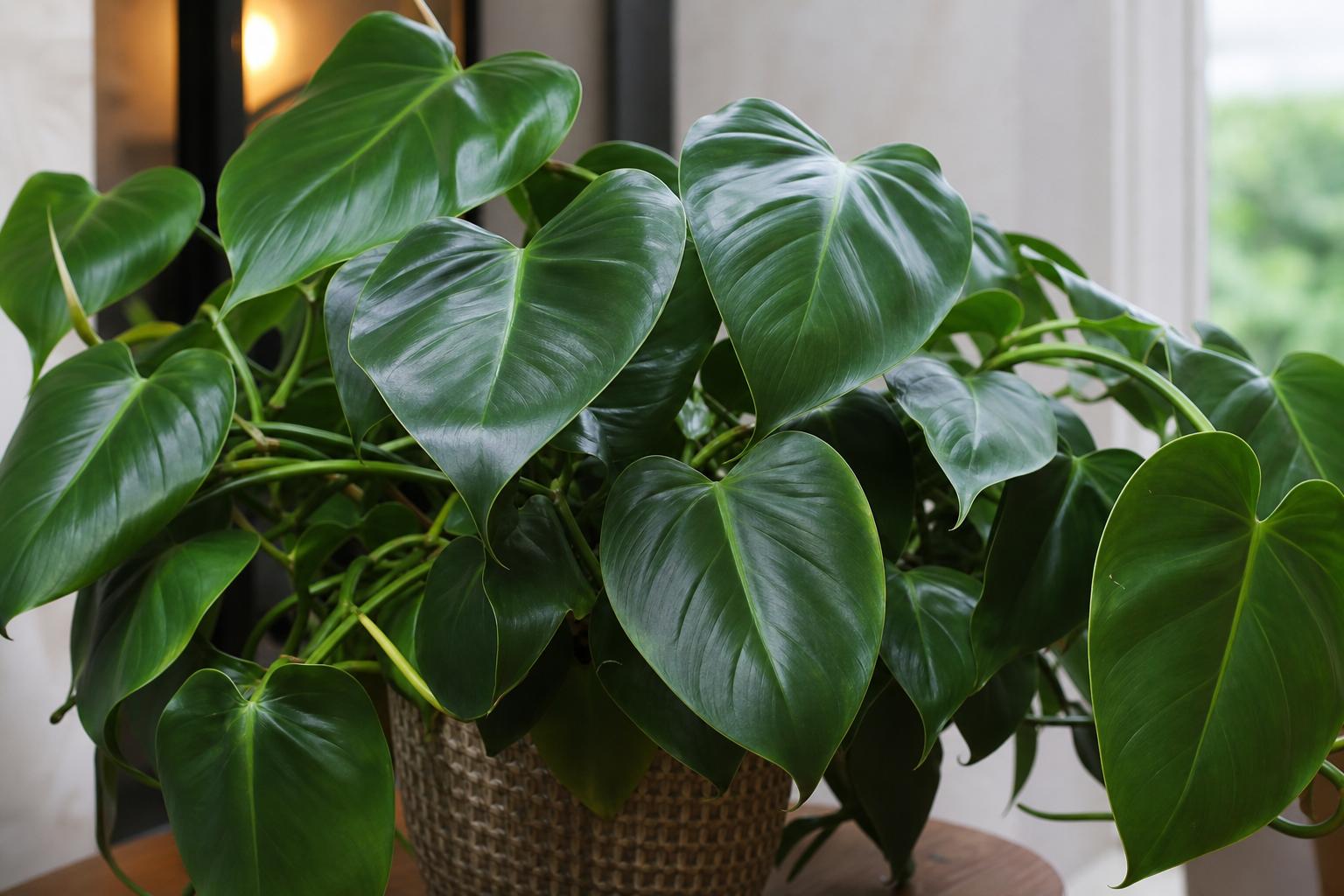
Philodendron is a genus in the Araceae family, native mainly to the tropical Americas. In the wild, many species begin life as hemiepiphytes—germinating on trees and sending roots down to the soil. That climbing instinct explains why so many philodendrons perk up when you give them a pole or trellis. Others grow as self-heading rosettes with a more sculptural, upright habit. The hallmark traits: heart-shaped or lobed leaves, aerial roots, and a talent for adapting to a range of indoor conditions.
Why the Canadian devotion? They’re both beautiful and practical. Long winters and short days push a lot of houseplants to the brink. Philodendrons, by contrast, tolerate “bright indirect” light and bounce back fast if you slip up on watering. They play nicely with apartments, older homes with tall drafty windows, and newer builds with dry, forced-air heating. Their flexibility means you can decorate with them almost anywhere: a shelf, a bookcase, a north-facing room that never sees direct sun.
One useful taxonomy note: the plant once popularly sold as “Philodendron selloum” (tree philodendron) is now classified by botanists as Thaumatophyllum bipinnatifidum. You’ll still see “selloum” on tags across Canadian big-box stores and nurseries—don’t let the name change throw you. Care is similar to many self-heading philodendrons: strong light, space to spread, and a sturdy pot.
Also, philodendron is often confused with pothos (Epipremnum aureum). Pothos leaves are typically thicker and have a distinct midrib and texture, while philodendron heartleafs (Philodendron hederaceum and close relatives) have thinner, softer leaves with a more pronounced heart shape and cataphylls (those papery sheaths around new growth). Both are great for beginners, but a true philodendron tends to appreciate slightly higher humidity and benefits more dramatically from a climb.
Light Requirements in a Northern Climate
“Bright, indirect light” is helpful… until you try to translate it to a December morning in Edmonton. Here’s the real picture: philodendrons grow best with a few thousand lux (roughly 200–500 foot-candles) for much of the day. In Canadian homes, that typically means within one to two metres of an unobstructed window. South or west windows are powerhouses in summer, but in winter the sun sits low and weak, and even a north window can be a friend if there aren’t tall buildings or conifers blocking it.
What does this look like in practice?
- East-facing windows: gentle morning sun, a sweet spot for most philodendron varieties year-round. Place the plant close to the glass in winter; pull back a bit in July if leaves start to pale.
- South-facing windows: excellent in winter; use a sheer curtain from late spring onward to avoid scorching. A bright south exposure helps variegated types, like Pink Princess, hold their colour.
- West-facing windows: warm afternoon sun, stronger than east. Keep a small buffer (30–60 cm) from the glass during heat waves.
- North-facing windows: workable if the plant sits right at the window, especially in summer or in bright cities like Vancouver. Supplement in winter for best growth.
Want a quick, low-tech test? If you can comfortably read a book at midday without turning on a lamp, your philodendron will likely be fine. For more precision, a simple lux meter app gives a ballpark: aim for 1,000–5,000 lux for several hours a day. Under 800 lux, most philodendrons stretch, produce small leaves, and lose variegation. Over 8,000–10,000 lux (especially with direct sun), some cultivars scorch, showing bleached patches or crisped edges.
Grow Lights That Make Sense in Canada
The farther north you live, the more likely you’ll add artificial light from October to March. A full-spectrum LED with a colour temperature around 5,000–6,500 K mimics daylight well. For shelves or plant stands, slim LED bars or panels are efficient and unobtrusive. A 20–40 W high-quality LED covering a shelf can keep several medium philodendrons happy through winter.
Practical placements:
- Distance: 20–45 cm above the canopy for most LED bars. Too close and you’ll bleach variegation; too far and growth slows.
- Duration: 10–12 hours in winter, 8–10 hours spring and fall, often unnecessary in peak summer if window light is strong.
- Timing: Use a timer to keep it consistent. Plants love routine as much as people do.
LEDs are widely available across Canada—from hardware chains to plant specialty shops and online retailers. Many Vancouver and Toronto plant stores carry sleek, warm-looking bars suited for living spaces if you prefer not to stare at an industrial grow light in your living room.
Watering Philodendrons the Smart Way
Overwatering doesn’t mean how much you water at one time—it means how often. Philodendrons prefer a moist-but-aerated root zone. In a chunky aroid mix (more on that shortly), this typically looks like watering thoroughly, letting excess drain, and then waiting until the top several centimetres are dry before watering again. In a standard peat-heavy potting soil, you’ll need to be extra careful to avoid soggy roots.
General rhythm in Canadian homes:
- Winter: With lower light and drier air, water less often—every 10–21 days for medium pots is common. Always check the soil, not the calendar.
- Summer: Faster growth and higher transpiration means more frequent watering—every 5–10 days, depending on pot size, light, and humidity.
Instead of guessing, use signals you can trust:
- Finger test: If the top 3–5 cm are dry, and the pot feels lighter, it’s time.
- Moisture meter: Not mandatory, but handy for large planters where your finger can’t reach the core. Learn your meter’s “dry” number for your specific mix.
- Leaf language: Droop plus cool, wet soil suggests overwatering. Droop with dry, light soil means “I’m thirsty.” Yellowing older leaves with a mushy stem often points to root rot.
Water Quality in Canadian Cities
Water quality matters more than many realize. Different cities across Canada have different profiles:
- Hard water (e.g., parts of Calgary, Regina): Higher minerals can leave residue and build up salts in soil, showing as crisp brown edges. Flush pots thoroughly every month or two, or use filtered water for sensitive, variegated types.
- Soft water (e.g., much of Vancouver): Generally plant-friendly, but still be mindful of chlorine or chloramine.
- Chlorine vs. chloramine: Chlorine dissipates if water sits out for 24 hours. Chloramine does not; use a carbon filter if your municipality uses it (check your city’s water report).
Room-temperature water prevents shock. In winter, icy tap water + cool window drafts = sulking roots. If you’ve ever noticed a sudden, unexplained yellow leaf after a winter watering, that temperature drop could be the culprit.
The Ideal Soil Mix and Potting
Philodendron roots want air as much as they want moisture. A standard “all-purpose potting soil” stays wet too long—especially in dim winter light—leading to slow growth and susceptibility to rot. An aroid mix is the sweet spot: light, chunky, and fast-draining, with ingredients that hold moisture without smothering roots.
Three reliable recipes, easy to source in Canada:
- Balanced Aroid Mix (simple and effective): 40% peat or coco coir, 30% perlite or pumice, 20% fine orchid bark, 10% worm castings or composted bark.
- Ultra-Chunky Mix (for self-heading types and big pots): 35% coco coir, 25% medium orchid bark, 20% perlite/pumice, 10% horticultural charcoal, 10% composted bark or worm castings.
- Peat-Free Lean Mix (for sustainability): 45% coco coir, 25% perlite/pumice, 20% fine bark, 10% rice hulls or coco chips.
Canadian-sourced components are widely available: Pro-Mix HP or BX (peat-based, airy), Sunshine Mix, perlite from big-box stores, fine orchid bark from orchid suppliers, horticultural charcoal, worm castings, and coco coir bricks. If you can’t find bark locally, consider sifting a reputable orchid bark to a smaller grade so it blends evenly with your base.
Choosing Pots That Work
Drainage holes are non-negotiable. Grow your philodendron in a plastic nursery pot with drainage, then slip that into a decorative cachepot if you like. Terra cotta breathes and helps dry mixes faster, ideal for heavy-handed waterers. Glazed ceramic retains moisture longer—good in very dry apartments.
Avoid upsizing by more than one or two pot sizes at a time. Too much wet mix around small roots creates a swamp. For trailing types like Philodendron hederaceum, repot every 12–24 months. Self-heading philodendrons with thick roots often appreciate fresh mix annually, especially if you feed generously.
Step-by-Step: Repotting a Philodendron
- Water lightly 24 hours before repotting. Damp roots are more pliable and less shock-prone.
- Loosen the root ball. Gently tease out circling roots with your fingers. Trim any black, mushy sections with sterilized scissors.
- Add fresh mix to the new pot, setting the plant so the base of the stem sits at the same height as before—no deeper.
- Backfill and tap the pot to settle mix around roots. Don’t overpack; roots need air.
- Water thoroughly, letting excess drain. Add a stake, coir pole, or moss pole now if you plan to train the plant upward.
- Keep out of direct sun for a week while it adjusts. Resume normal care afterward.
Self-Watering, LECA, and Alternatives
Self-watering planters can be brilliant in dry homes or for frequent travellers: the reservoir wicks moisture up, and the airy mix on top prevents rot. Start by top-watering for a couple of weeks until roots explore, then let the wick take over. Watch for salt buildup at the evaporation line and flush monthly.
LECA (lightweight expanded clay aggregate) and semi-hydroponics also work for philodendrons. Benefits: fewer fungus gnats, consistent moisture, easy flushing. Trade-offs: you’ll manage nutrient solutions (mild fertilizer in the reservoir), monitor pH, and repot into LECA once roots adapt. If you enjoy tinkering—or want to eliminate soil mess—LECA is a solid path.
Temperature and Humidity in Canadian Homes
Philodendrons prefer 18–29°C. They tolerate short dips to 15°C, but expect slowed growth. Under 12°C, many will suffer leaf damage. Indoors, the enemy isn’t just cold—it’s drafty, cold air near windows and exterior doors. If your windows freeze in January, keep plants 30–60 cm back, or insulate with a sheer curtain.
Humidity is the winter pain point. Forced-air systems can drop indoor relative humidity to 20–30%. Philodendrons usually survive that, but the edges may crisp and new leaves can emerge small or deformed. Aim for 45–60% if possible.
Practical humidity boosters that actually help:
- Humidifier: A small ultrasonic unit near your plants makes a noticeable difference. Use distilled or filtered water in hard-water regions to avoid white mineral dust.
- Pebble trays: Slight bump, not a miracle. Place the pot on pebbles above water, not sitting in it.
- Group plants: Transpiration nudges humidity up around the cluster. Combine with a fan for gentle airflow.
- Location: Bathrooms with windows or kitchens often run more humid. Rotate plants through these spots during peak dryness.
Winter Transport and Shipping
Bringing a new philodendron home in January? Wrap it. Many Canadian shops offer paper sleeves; add a fabric tote or insulated bag for anything below 0°C. Ten minutes in a deep freeze can blacken leaves overnight. If you order online, most reputable sellers pause shipping during cold snaps or use heat packs and insulation. When temperatures drop below -10°C, even heat packs may fail. Some carriers and shops have explicit “winter shipping windows”—always check before you buy.
Feeding and Growth
Philodendrons are moderate feeders. During active growth (roughly April to September), a half-strength, balanced liquid fertilizer every 2–4 weeks works well. In bright light with support, they’ll happily use more. In winter, reduce to monthly or pause if growth is slow.
Options you’ll find across Canada:
- Liquid synthetics: Balanced N-P-K (e.g., 3-1-2 or 10-10-10 diluted) keeps it simple. Feed lightly and consistently.
- Organic liquids: Fish/kelp emulsions add micronutrients and can improve resilience. Mind the smell; dilute well.
- Slow-release granules: Useful if you forget to feed. Sprinkle sparingly on top in spring; avoid crowding the stem.
Watch for signs: pale new leaves or stalling growth may suggest underfeeding (assuming light is adequate). Burnt tips and salt crusts indicate overfeeding or insufficient flushing. To reset a plant that’s had a heavy hand, run water through the pot for several minutes to leach excess salts.
To Climb or Not to Climb
Most vining philodendrons develop larger, more mature leaves with support. A coir or moss pole lets aerial roots anchor, triggering a visible jump in leaf size and sometimes changing leaf shape. Self-heading types like ‘Congo’ or ‘Moonlight’ prefer stout stakes to keep stems upright as leaves unfurl. If you’ve only grown trailing baskets, try a pole with your next heartleaf: the transformation is rewarding.
Popular Philodendron Types in Canada
From classic green vining plants to collectable variegates, here’s what you’ll commonly see in Canadian shops and online listings:
Vining and Trailing
- Philodendron hederaceum (Heartleaf): The quintessential beginner pick—glossy green, fast-growing, forgiving. Cultivars include ‘Brasil’ (lime-green variegation) and ‘Micans’ (velvety, bronze-green leaves).
- Philodendron hederaceum ‘Brasil’: Brighter light brings crisper lime streaks; lower light blends them to a softer green.
- Philodendron ‘Micans’: Prefers medium-bright light to maintain velvet sheen and rich colour.
Self-Heading and Upright
- Philodendron ‘Congo’ (Green/Red): Thick, paddle-like leaves on a clumping plant. Likes room and steady feeding.
- Philodendron ‘Birkin’: Variegated pinstripes on dark green. Needs brighter light to hold contrast; can occasionally revert to greener leaves over time.
- Thaumatophyllum bipinnatifidum (sold as Philodendron selloum): Deeply divided leaves; becomes a floor plant with presence. Give it space and strong light.
Variegated and Collectable
- Philodendron ‘Pink Princess’: Dark leaves with pink variegation. Needs bright, indirect light to keep pink; avoid leggy, low-light growth or it may revert.
- Philodendron ‘White Knight’ / ‘White Wizard’: White and green variegation with different growth habits. Both require consistent, bright light to maintain white patterning.
- Philodendron bipennifolium (var. aurea, “Lime fiddle”): Chartreuse tones; loves strong, filtered light.
Typical Canadian Price Ranges (recent years)
| Plant | Size/Type | Typical Price (CAD) | Notes |
|---|---|---|---|
| Philodendron hederaceum (green) | 10–15 cm pot | $10–$25 | Common at big-box retailers and local nurseries. |
| ‘Brasil’ / ‘Micans’ | 10–15 cm pot | $15–$35 | Prices dip during spring shipments. |
| ‘Birkin’ | 12–15 cm pot | $20–$45 | Needs brighter light to keep variegation crisp. |
| ‘Congo’ (Green/Red) | 17–25 cm pot | $35–$90 | Becomes a substantial floor plant. |
| Pink Princess | Rooted cutting to 12–15 cm plant | $90–$300+ | Pattern, size, and market trends drive price swings. |
| ‘White Knight’ / ‘White Wizard’ | Node to established plant | $80–$250+ | Stable white requires strong light and careful feeding. |
Supply fluctuates through the year. Tissue-cultured philodendrons have expanded availability and lowered costs compared with the early pandemic boom. Shop local nurseries, reputable online sellers within Canada (to avoid border issues), and seasonal plant markets for the best selection.
Propagation and Pruning
Most vining philodendrons are a dream to propagate. Each node—the slight bump on the stem where a leaf and aerial root emerge—can become a new plant. Self-heading types are a bit trickier but can also be propagated by division or air layering.
Identify a Node, Then Cut with Confidence
- Find a healthy section with at least one node and ideally a small aerial root nub. Avoid cutting soft, damaged, or pest-ridden parts.
- Use sterilized scissors or a sharp knife. Clean with isopropyl alcohol between cuts.
- Make the cut 1–2 cm below the node. If the cutting includes one or two leaves, it will root more readily while still photosynthesizing.
- Optional: Dip in a rooting hormone (IBA/NAA) to encourage faster roots.
- Root in your medium of choice:
- Water: Easy to monitor, but transition gently to soil once roots reach 3–5 cm to prevent water roots from sulking.
- Perlite or perlite/vermiculite: Fast and clean. Keep moist and airy.
- Sphagnum moss: Great for humid rooting; don’t pack too tight.
- LECA: Semi-hydro rooting works well if you plan to keep the plant in LECA.
- Provide bright, indirect light and high humidity (a clear bin or humidity dome speeds rooting). Vent daily to prevent mold.
- Pot up into a chunky mix once you have a solid cluster of roots.
Air Layering for Larger Stems
For thick or self-heading philodendrons, air layering is gentler than taking a bare cutting:
- Choose a node on the stem and lightly wound the stem with a sterile blade.
- Wrap the area with moist sphagnum moss and cover with plastic wrap or a purpose-made pod. Keep it snug but allow a small opening for air exchange.
- Once strong roots form inside the moss (2–8 weeks), cut below the root ball and pot the new top in fresh mix.
Pruning Goals
Prune to shape, remove leggy sections, or encourage branching. Trim just above a node to stimulate growth from that point. If a variegated plant is reverting (new leaves solid green), cut back to a section showing stable variegation. Conversely, if high white or pink patches dominate and growth is weak, allow a greener leaf or two to boost energy before taking the next variegated cutting.
Trading and Shipping Cuttings Within Canada
Shipping within Canada is straightforward, but smart timing matters. Avoid deep winter and peak summer heat. Most hobbyists ship cuttings without soil, wrapped in damp paper and plastic. Canada Post and major couriers allow live plants, but for imports from outside Canada, the Canadian Food Inspection Agency (CFIA) regulates live plant entry; check CFIA’s Automated Import Reference System (AIRS) for current requirements before ordering internationally. Within Canada, keep it simple: clean, pest-free, well-packed plants, and clear communication with the recipient.
Pests and Diseases: Prevention and Treatment
Healthy philodendrons fight off most problems, but even the best plant parent will tangle with pests eventually. Catching issues early is half the battle.
Common Pests in Canadian Homes
- Spider mites: Like dry, warm air (so, Canadian winters). Look for fine webbing, stippled leaves, and dusty-looking undersides.
- Mealybugs: White, cottony clumps on leaf nodes and undersides. Sticky honeydew may appear on surfaces below.
- Thrips: Slender, fast-moving insects leaving silvery streaks and deformed new growth. Often hitchhike on new plants.
- Scale: Brown, shell-like bumps stuck to stems and leaf veins. They look like bark, then suddenly your plant is sticky.
- Fungus gnats: Harmless to leaves but annoying. Their larvae can nibble roots in wet soil.
Treatment Strategies that Work (and are available in Canada)
- Isolation: Move the affected plant away from your collection immediately.
- Mechanical removal: Wipe leaves and stems with a damp cloth. For mealybugs and scale, dab with 70% isopropyl alcohol on a cotton swab.
- Insecticidal soap: Safer’s insecticidal soap is widely available. Thoroughly spray tops and undersides; repeat every 5–7 days for 3–4 rounds to catch life cycles.
- Horticultural oil: Suffocates pests on contact. Apply according to label and avoid strong light immediately afterward.
- Sticky traps: Blue or yellow cards catch adult thrips and gnats, helping you monitor populations.
In Canada, follow labels regulated by Health Canada’s Pest Management Regulatory Agency (PMRA). Only use products indoors that are explicitly labeled for indoor plants. Systemic insecticides for home use are limited; always check the current label and local availability. With thrips, combine approaches: trim worst leaves, increase humidity, keep plants dust-free, and repeat sprays diligently.
Preventing Fungus Gnats and Root Issues
- Use a chunky mix that dries in the top layer between waterings.
- Bottom-water sparingly, and don’t let pots sit in saucers of water.
- Top-dress with a thin layer of sand or diatomaceous earth to deter egg-laying.
- Flush pots monthly to prevent salt buildup that stresses roots.
Leaf Spots, Rot, and Sanitation
Bacterial or fungal leaf spots show as water-soaked patches or brown lesions with yellow halos. Remove affected leaves with sterilized scissors, improve airflow, and water in the morning so leaves dry fast. Avoid misting if you have ongoing leaf-spot issues. Copper-based fungicides exist, but check labels for indoor use compliance and provincial regulations. Often, better airflow, less crowding, and careful watering solve the problem.
Seasonal Care Calendar for Canadians
Spring (March–May)
- Increase watering frequency as days lengthen.
- Repot if needed and refresh the top few centimetres of mix for established plants.
- Resume regular fertilizing at half-strength.
- Inspect for pests—winter is prime time for spider mites, and they may linger.
Summer (June–August)
- Provide bright, indirect light; shield from harsh midday sun near south/west windows.
- Consider moving plants outdoors after the last frost—bright shade only. Acclimate slowly over 7–10 days.
- Water more frequently; heat and wind outdoors can dry pots quickly.
- Feed consistently; train vines up poles for bigger leaves.
Fall (September–November)
- Bring outdoor plants back in before night temps dip below 12°C.
- Quarantine new or returning plants for 2–3 weeks; check for hitchhiking pests.
- Reduce feeding as growth slows; adjust watering to match lower light.
Winter (December–February)
- Pull plants slightly back from icy windows; add a sheer for draft control.
- Run a humidifier near your collection if RH drops below 40%.
- Add grow lights on timers for 10–12 hours if growth has stalled or internodes stretch.
- Water sparingly and avoid cold water shocks.
Troubleshooting: Symptoms and Fixes
| Symptom | Likely Cause | Fix |
|---|---|---|
| Yellowing lower leaves, mushy soil | Overwatering/root rot | Let soil dry, improve aeration, trim rotted roots, repot in chunky mix. |
| Leggy growth, small leaves | Insufficient light | Move closer to window or add a grow light; provide a support to encourage larger leaves. |
| Brown tips/edges | Low humidity or salt buildup | Boost humidity; flush soil; consider filtered water in hard-water cities. |
| Bleached patches | Too much direct sun or lights too close | Diffuse light with a sheer, raise lights 10–15 cm. |
| Sticky leaves or surfaces | Scale, mealybugs, or aphids (honeydew) | Isolate; wipe; treat with insecticidal soap or horticultural oil; repeat treatments. |
| Variegation fading on Pink Princess | Low light or reversion | Increase light; prune back to a node with stable variegation; propagate selectively. |
| New leaves deformed | Pests (thrips/mites), very low humidity, or nutrient imbalance | Inspect closely; treat pests; raise humidity; resume balanced feeding if light is adequate. |
Safety, Pets, and Kids
Philodendrons contain insoluble calcium oxalate crystals. If chewed, they can irritate the mouth and GI tract of cats, dogs, and people. Typical signs include drooling, pawing at the mouth, and vomiting. The Canadian Veterinary Medical Association and provincial veterinary colleges advise keeping such plants out of reach of curious pets and children. If ingestion occurs, rinse the mouth with water and contact your veterinarian or a poison control helpline for guidance. Severe reactions are uncommon, but it’s always best to err on the safe side.
Practical placement ideas: high shelves, hanging planters, or behind sturdy room dividers. Avoid dangling vines within a cat’s pounce radius—velvet-leaved ‘Micans’ looks like a toy to many felines.
Sustainability and Sourcing
Peat moss is a common component of potting mixes in Canada. The country is also a major producer, and the peat industry here emphasizes bog restoration practices. Even so, many growers are shifting to coco coir blends to reduce reliance on peat. Either can grow an excellent philodendron if you build in chunky aeration with bark and perlite. If sustainability is your priority, choose peat-free mixes or blends with a lower peat fraction and support nurseries that share transparent sourcing practices.
On the plant sourcing side, tissue culture has expanded availability of in-demand cultivars, cutting down on wild collection. Buying from reputable Canadian growers and retailers reduces the risk of importing pests and avoids customs headaches. If you’re tempted by an overseas listing, check CFIA import rules first. For local deals, look to community plant swaps, reputable Facebook groups, and seasonal markets—just quarantine any newcomer for two weeks.
Philodendron vs. Pothos and Monstera: Clear Differences
These three are often lumped together, but they’re distinct genera with different quirks:
- Philodendron: Softer, often heart-shaped leaves; clear nodes with cataphylls; strong response to climbing supports; many species and cultivars suited for indoor life.
- Pothos (Epipremnum aureum): Thicker, waxier leaves; visible midrib; tolerates slightly lower humidity and light; excellent for offices and dimmer rooms.
- Monstera (e.g., Monstera deliciosa): Large, fenestrated leaves with splits and holes as the plant matures; needs space and stronger support; bigger appetite for light and nutrients.
Care overlaps, but a philodendron generally appreciates a bit more humidity and rewards you with dramatic leaf size increases when allowed to climb.
Real-World Setups in Canadian Homes
Condo in Toronto with a south-facing window? Place a Pink Princess one metre back with a sheer curtain. Run a 20 W LED bar for 10 hours in winter. Keep a humidifier at 45–50%. Feed half-strength every two weeks in spring and summer. Expect steady variegation and larger leaves as it climbs a coir pole.
Basement suite in Calgary with only a north window? Use a 30–40 W full-spectrum LED about 30 cm above the canopy for 12 hours in winter, 10 in summer. Choose a chunky mix and a terra cotta pot to prevent waterlogging. Favor heartleaf and ‘Micans’—both thrive with supplemental light and will trail elegantly without crowding the space.
Vancouver loft with bright, filtered light and mild humidity? Many philodendrons will cruise. Add a moss pole and watch your ‘Micans’ or hederaceum leaves size up dramatically. Because the city’s water is softer, salt buildup is less of a headache—still, flush occasionally and dust leaves monthly for a glossy, healthy look.
Care Summary at a Glance
| Category | Recommendation |
|---|---|
| Light | Bright, indirect; 1,000–5,000 lux for several hours. East or bright north window with grow light in winter is ideal. |
| Water | Thorough soak, then dry top 3–5 cm before re-watering. Less frequent in winter. |
| Soil | Chunky aroid mix: coir/peat + perlite/pumice + fine orchid bark + a little organic matter. |
| Temperature | 18–29°C preferred; protect from cold drafts; avoid below 12°C. |
| Humidity | 45–60% is comfortable; humidifier helps in dry Canadian winters. |
| Fertilizer | Half-strength every 2–4 weeks spring through summer; reduce in winter. |
| Support | Coir/moss pole boosts leaf size for vining types; stakes for self-heading. |
| Toxicity | Considered toxic to pets and people if chewed; keep out of reach. |
Advanced Tips for Enthusiasts
Dialling in Light with Simple Tools
A $20 lux meter or a reliable phone app takes the guesswork out. Track readings in your favourite plant spots across the seasons. Winter numbers often drop to a quarter of summer levels in the same location. Move plants closer to windows or boost with LEDs between October and March.
Reading Nutrition Without a Lab
Consistent yet light feeding usually beats sporadic heavy doses. If you’re adventurous, you can track total dissolved solids (TDS) in your runoff with an inexpensive meter to avoid salt accumulation—aim for modest levels and flush if numbers creep high. Not necessary, but satisfying if you like data.
Moss Poles That Actually Root
Moisten the pole thoroughly before installation. As aerial roots reach, mist the pole itself rather than just leaves. For maximum effect, loosely wrap a little sphagnum around the pole where nodes touch, and secure with plant tape. This hands roots an easy on-ramp to anchor, and you’ll see leaf size jump on the next few nodes.
Managing Variegation
Variegated philodendrons have fewer chloroplasts in white or pink sections, so they need brighter light to photosynthesize efficiently. Too little light invites reversion; too much burns the pale tissue. Strike the balance by keeping them in strong, filtered light and avoiding direct midday sun. When pruning, keep a backup cutting of a well-variegated node before you experiment with shaping—insurance against an accidental reversion.
Where Canadians Find Good Plants and Supplies
Big-box garden centres often carry healthy, affordable philodendrons—watch for fresh shipments in spring. Independent nurseries and specialty plant shops curate a wider selection, including uncommon varieties and better-quality growing media. Online Canadian sellers and community groups are great for trading cuttings and finding variegated cultivars without crossing the border. For soil components, check local garden centres for perlite, bark, and quality potting mixes; many hydroponic stores stock coco coir, LECA, and nutrients suitable for houseplants.
Keep an eye on seasonal deals. Early spring and late summer typically bring waves of new stock and better prices. In winter, shipping can be tricky and selection shrinks—shop locally and transport plants warmly.
Frequently Asked Questions
How much light does a philodendron really need?
Most thrive with bright, indirect light—think 1,000–5,000 lux for several hours daily. Near an east window is perfect. In Canadian winters, add a 20–40 W LED for 10–12 hours if leaves shrink or spacing between leaves stretches.
Why are my philodendron’s leaves turning yellow?
Common reasons: overwatering (especially in dense soil), low light, or natural aging of oldest leaves. Check soil moisture and roots, increase light, and refresh the top layer of mix if it’s compacted.
Can I grow a philodendron in water long-term?
You can, but growth is typically slower and leaves smaller than in a chunky soil mix or semi-hydro setup. Change water regularly and add a gentle hydroponic nutrient if you want to keep it in water for months.
What’s the best grow light for philodendrons?
A full-spectrum LED bar or panel in the 5,000–6,500 K range. Position 20–45 cm above the plant and run 8–12 hours depending on season. Avoid overly intense, close lights that bleach variegation.
When should I repot?
When roots circle heavily, water runs straight through, or the plant dries out within a day or two. For many vining types, every 12–24 months is typical. Self-heading varieties may appreciate fresh mix yearly.
How much does a Pink Princess cost in Canada?
Prices vary by size and variegation quality. Recently, small, well-rooted plants often range from about $90 to $300+. Larger, highly variegated specimens or multi-node cuttings can cost more. Expect fluctuations with supply and demand.
Are philodendrons safe around cats and dogs?
No. They contain insoluble calcium oxalates that can irritate the mouth and GI tract. Keep out of reach and contact your vet if a pet chews leaves or stems.
Can I keep my philodendron outdoors in summer?
Yes—after the last frost. Place in bright shade or dappled light, acclimate gradually over a week, and bring inside before nights fall below 12°C. Check for pests before reintroducing it to your indoor collection.
How do I get rid of thrips on my philodendron?
Isolate the plant, prune worst damage, and treat with insecticidal soap or horticultural oil every 5–7 days for several rounds. Add sticky traps and improve airflow. Inspect nearby plants—thrips rarely travel alone.
Why is my ‘Birkin’ losing its stripes?
Often a combination of low light and natural reversion. Move it to brighter, indirect light and feed lightly during active growth. Pruning to encourage new growth can help restore variegation over time.
Why are leaf edges browning even though I water well?
Likely low humidity or mineral/salt buildup. Boost humidity to 45–60%, flush the pot thoroughly, and consider filtered water if your city’s supply is hard.
How cold is too cold for a philodendron during transport?
Anything below 5°C is risky; below 0°C is dangerous. Wrap the plant, pre-warm your vehicle, and avoid prolonged exposure. For shipping, most sellers in Canada pause orders during deep cold or use heat packs and insulation—ask before buying.
What’s the simplest soil mix I can use and still succeed?
Start with a high-quality potting mix and add equal parts perlite and fine orchid bark (1:1:1). It’s easy, well-aerated, and works for nearly every philodendron in typical Canadian homes.
Final Thought
Growing a philodendron in Canada is less about fighting the climate and more about listening to it. Strong but filtered light, a mix that breathes, a nudge of humidity in winter, and steady—not heavy—feeding add up to a plant that unfurls leaf after leaf, even when the world outside is snow and salt-streaked sidewalks. Set the basics right once, and your philodendron will do the rest, quietly transforming your space, season after season.