



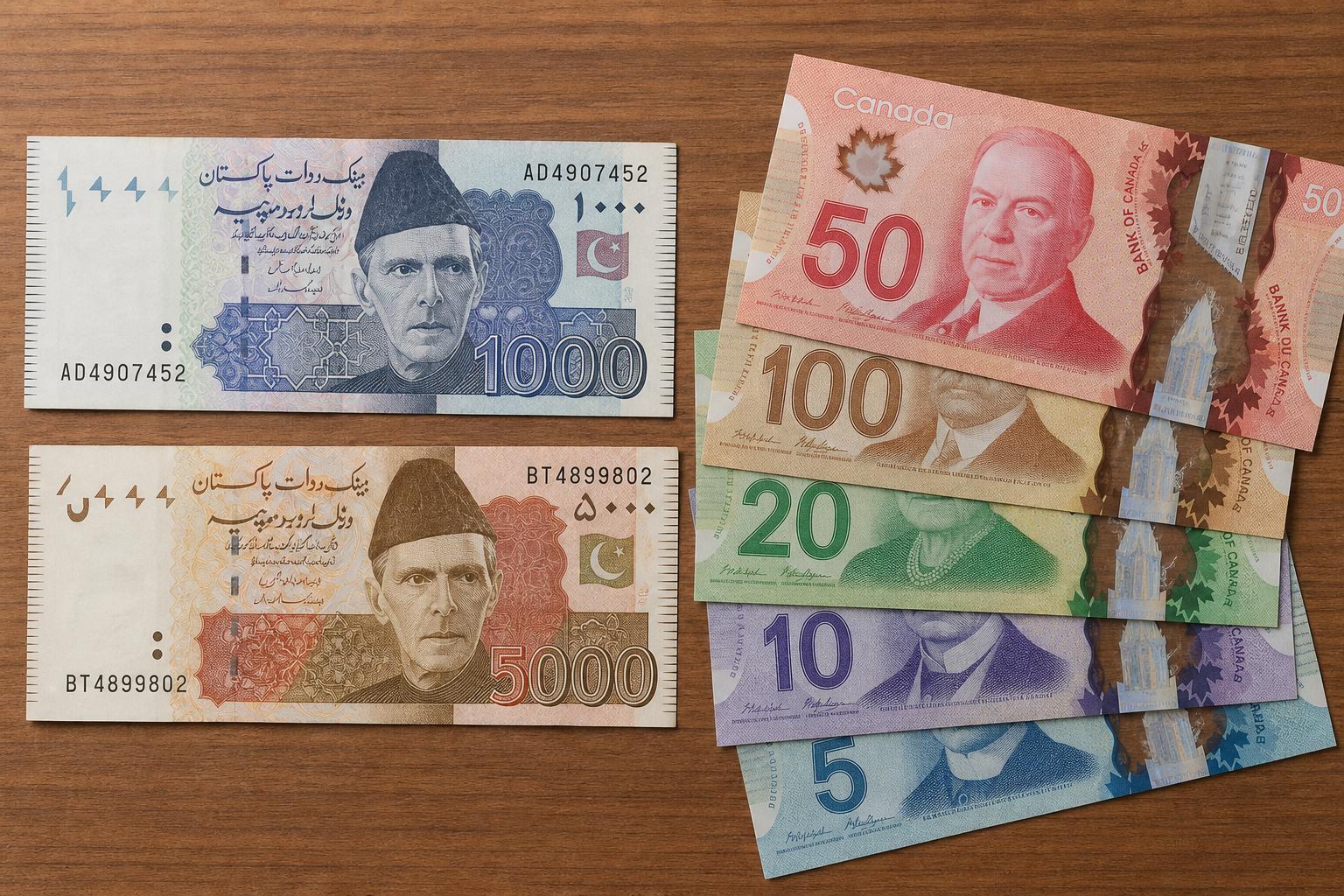







HBAR Price CAD: A Canadian’s Guide to Hedera’s Value, Costs, and Smart Ways to Track It
HBAR—the native token of the Hedera network—has gathered a loyal following for its speed, tiny fees, and enterprise-friendly governance. But if you live in Canada, the question that comes up most often isn’t about block times or TPS. It’s simpler: what’s the HBAR price in CAD right now, and how do you make sense of it? This guide answers that in plain language, with Canadian examples, fees you’ll actually encounter, and practical steps to keep your all-in cost low. You’ll also find insights on taxes, regulations, wallets, and risk management—so you’re not just chasing a quote, you’re building a process you can rely on.
Why the “HBAR Price CAD” Question Matters More Than You Think
It’s easy to assume price is just a number on a screen. In practice, your realized price—the one that shows up on your statement in Canadian dollars—depends on several moving parts: the crypto exchange you use, whether you buy HBAR in a CAD trading pair or convert via USD or stablecoins, the foreign exchange rate, and the trading fees. Two Canadians can press Buy at the same time and end up with meaningfully different outcomes. This article focuses on those practical edges. Because if you want your portfolio to be in control rather than at the mercy of hidden costs, getting specific about the “HBAR price CAD” question is where it starts.
Hedera and HBAR in Brief: What You’re Pricing in CAD
Hedera is a public network that uses a hashgraph consensus algorithm rather than a traditional blockchain. Its architecture is built to process transactions quickly with extremely low, predictable fees, often a fraction of a cent worth of HBAR. That characteristic alone matters when you’re comparing ecosystems for real-world applications, from supply chains to tokenized assets. HBAR is the utility token that pays transaction fees and secures the network through staking, and it functions as the economic backbone for services running on Hedera.
Another notable feature is governance. Hedera’s Governing Council includes a rotating set of global organizations from technology, telecom, finance, and academia. Names often cited include enterprises such as Google, IBM, LG Electronics, Deutsche Telekom, and Avery Dennison, among others. The council operates with term limits and geographic diversification to avoid concentration of control. For investors trying to understand why HBAR sometimes trades differently than purely retail-driven projects, that enterprise footprint is an important piece of the puzzle.
Fees and Performance: Why Builders Pay Attention
Hedera’s network fees are small, stable, and denominated in HBAR. From a developer’s point of view, that makes budgeting easier than on networks where gas fluctuates wildly. For Canadian users, it simply means that withdrawing HBAR to self-custody or interacting with on-chain services won’t erode your holdings through network fees. That doesn’t mean your all-in Canadian cost will be trivial—exchange spreads and fiat on-ramps still matter—but the protocol itself is designed to keep friction low.
What Moves HBAR’s Price in CAD
Beneath the hood, you’re looking at three linked markets:
- HBAR trading pairs (HBAR/USD, HBAR/USDT, HBAR/BTC, and sometimes HBAR/CAD)
- The CAD/USD foreign exchange rate
- Liquidity on the platform you use (and its associated spread and fees)
If you buy HBAR directly against CAD on a Canadian platform, your fill reflects that venue’s order book. If you convert CAD to USD or a stablecoin and then buy HBAR, your effective price includes both the FX or conversion cost and the HBAR trade. The difference can be material during volatile windows.
How HBAR Price in CAD Is Formed: The Mechanics
There isn’t one “official” HBAR price in Canadian dollars. Instead, think of it as a derived figure that depends on where you source liquidity. Here are the core paths:
1) Native HBAR/CAD Pairs
Some Canadian crypto trading platforms offer a direct HBAR/CAD order book. Your price here is the best available bid or ask on that platform, plus any trading fee. If the platform is liquid, spreads are tight and slippage is low. If it’s thin, market orders can move the price and limit orders become essential. Always glance at the order book depth before hitting Buy.
2) HBAR/USD or HBAR/USDT Price, Then Converted to CAD
Many platforms quote HBAR primarily against USD or a major stablecoin. If you fund your account in CAD, you’ll face one or more conversions:
- CAD to USD (or CAD to USDT/USDC), then
- USD to HBAR (via HBAR/USD or HBAR/USDT)
Each conversion step can add cost via a spread or fee. On some platforms, you won’t see every step itemized. That’s why it helps to back out the math yourself every so often and compare platforms.
3) The FX Layer: CAD/USD Matters More Than You Think
Even if you never touch USD explicitly, the global crypto market often references USD as the base unit. When the Canadian dollar weakens, your HBAR price in CAD will rise mechanically if the USD price of HBAR is unchanged, and fall when CAD strengthens—just as it would for oil priced in USD. If you actively trade, keep the Bank of Canada rate announcements and broader USD/CAD trends on your radar. A favorable move in FX can partially offset a crypto pullback, and vice versa.
Where Canadians Check the HBAR Price in CAD
You have three broad options for reliable pricing:
Registered Canadian Crypto Trading Platforms
Canada regulates crypto asset trading platforms (CTPs) at the provincial level through the Canadian Securities Administrators (CSA). Many platforms operate under registration categories such as restricted dealer or investment dealer, or through interim commitments pending full registration. To reduce counterparty and compliance risk, start your search with the CSA’s list of registered platforms. Popular Canadian platforms with CAD funding and a broad coin lineup often include names like NDAX, Newton, VirgoCX, and Bitbuy. Availability of HBAR varies by platform and over time—always confirm the asset list on the provider’s site before signing up.
Advantages for Canadians include Interac e-Transfer support, domestic bank wires, T5-style year-end summaries in some cases, and customer support in Canadian time zones. You also get pricing directly in Canadian dollars (either as native HBAR/CAD pairs or through displayed CAD conversions).
Global Exchanges That Serve Canadians
Some international exchanges accept Canadian clients and allow CAD deposits or fast card purchases. Features and fees can be attractive, but regulatory status differs. Before funding, verify how the platform is authorized to operate in Canada and whether you’re protected under Canadian investor safeguards. If you proceed, double-check whether HBAR is supported in your province and whether CAD on-ramps are truly CAD (vs. hidden USD conversions under the hood).
Aggregators, Data Feeds, and Price Widgets
Price aggregators can display HBAR’s value in Canadian dollars using live FX and multiple exchange feeds. They’re great for a quick pulse check, but if you plan to trade, always confirm the price on the venue you’ll actually use. The number that matters is the one you can transact at, not the one on a generic index.
Practical Ways to Read the HBAR/CAD Chart
Charting in Canadian dollars can feel unfamiliar if you’re used to crypto quoted in USD. A few tips help smooth the transition:
Anchor to Psychological Levels in CAD
Round figures like $0.10 CAD, $0.25 CAD, $0.50 CAD, and $1.00 CAD often attract attention even if the USD equivalent looks odd. Set alerts around those numbers, and you’ll catch moves that may matter to Canadian market participants specifically. Liquidity can cluster right above or below these levels on platforms with native HBAR/CAD books.
Mix Timeframes to See the Full Picture
Use a higher timeframe (daily or weekly) to map major support and resistance in CAD, then drop to the four-hour or one-hour chart to plan entries. Because crypto trades around the clock, intraday volatility can be sharp. If you only watch a five-minute chart, you might miss the context that keeps you from chasing green candles into resistance.
Mind the Volume Source
Volume on a USD pair might dwarf a CAD pair. That’s not a problem—but it means signals on HBAR/USD can dominate intraday direction, while HBAR/CAD follows. When in doubt, check both. If you see a breakout on HBAR/CAD with no confirmation on large USD venues, expect noise and possible fade.
Your All-In HBAR Price in CAD: Fees, Spreads, and Slippage
Here’s what goes into the number you actually pay:
Trading Fees and Maker/Taker
Most platforms use tiered maker/taker fees. “Taker” fees apply when you hit the existing liquidity at market or place a limit order that fills immediately; “maker” fees apply when your limit order rests on the book and adds liquidity. Maker fees are often lower. If you’re patient and disciplined with your entries, the difference compounds over time.
Spreads and Slippage
The spread is the gap between the best bid and best ask. Slippage is the extra price movement you incur from the size and speed of your order. Thin books, big orders, and market volatility all magnify slippage. If you’re buying a meaningful amount of HBAR, consider slicing the order with several resting limits around your target rather than one blast at market.
Funding and Withdrawal Costs
Interac e-Transfer is fast but sometimes capped at lower amounts per transfer. Wires handle larger sums but can take longer and may have bank fees. On-chain, Hedera’s network fee to transfer HBAR is typically a fraction of a cent worth of HBAR, which is negligible. Exchange withdrawal fees, however, can differ—some pass through true network costs, others charge a flat fee for operational reasons. Always check the withdrawal fee schedule before depositing.
Notably in Canada: Derivatives and Leverage Are Restricted
Canadian rules materially restrict retail access to leveraged crypto derivatives on domestic platforms. If a website offers high leverage to Canadians without proper registration, that’s a red flag. Spot HBAR purchases are available at many compliant platforms, but margin products are limited or unavailable. Don’t assume offers you see on social media are allowed here.
Example: Calculating Your Real HBAR Price in Canadian Dollars
Let’s say you’re in Toronto, funding an account with $1,000 CAD by Interac e-Transfer. Suppose the platform shows HBAR at $0.15 CAD on the HBAR/CAD pair, with a 0.20% taker fee and no funding fee.
- You submit a market order for your full $1,000 CAD at $0.15 CAD/HBAR. Ignoring slippage for this example, you’d buy 6,666.6667 HBAR before fees.
- Trading fee at 0.20% on $1,000 CAD equals $2.00 CAD.
- Your net HBAR would be ($1,000 – $2.00) ÷ $0.15 = 6,653.3333 HBAR.
- If you then withdraw to your self-custody wallet and the platform charges 2 HBAR for the withdrawal while Hedera’s actual network fee is far less, your net becomes 6,651.3333 HBAR.
That’s a clean, transparent path. Now compare a two-step route: CAD to USDT, then USDT to HBAR. If the platform’s CAD→USDT conversion carries a 0.60% spread and the HBAR/USDT trade costs 0.20%, your take-home could be lower even if the USDT order book is deeper. The only way to know is to run the math with your platform’s live quotes and published fees.
Canadian Tax Basics for HBAR: What the CRA Expects
This isn’t tax advice, but here are the principles most Canadians rely on when dealing with HBAR and other crypto:
Capital Gains vs. Business Income
The Canada Revenue Agency (CRA) doesn’t classify crypto transactions by asset type alone, but by your intent and behavior. If you trade frequently, use leverage, or operate in a commercial manner, gains may be treated as business income (100% taxable). If you invest as an individual over longer horizons, gains may be capital gains (currently 50% taxable). The CRA considers multiple factors; there’s no single bright line. Keep consistent records to support your position.
Cost Basis and Realized Gains in CAD
Track every acquisition, disposal, and fee in Canadian dollars on the date of the transaction. Your adjusted cost base (ACB) accumulates across identical properties, which includes HBAR from different purchases. When you sell or swap HBAR for another crypto, that’s a disposition for tax purposes—even if you never convert back to fiat. Good recordkeeping saves headaches at tax time.
Staking, Airdrops, and Rewards
Staking or network-based rewards, if you receive them, are generally taxable as income at fair market value in CAD when you take possession. That amount also becomes your cost basis for those tokens. Many Canadian platforms restrict staking programs for regulatory reasons, so availability varies. If you use an offshore service, ensure you understand the tax and compliance risks.
Registered Accounts (TFSA, RRSP)
Direct crypto like HBAR is not a qualified investment for TFSAs, RRSPs, or RESPs. You can, however, hold crypto-focused ETFs that qualify, typically covering Bitcoin or Ether on Canadian exchanges. As of writing, there isn’t a mainstream Canadian ETF focused exclusively on Hedera. If that changes, confirm eligibility with your brokerage.
Foreign Reporting
Crypto held on foreign exchanges may be considered specified foreign property. If the total cost amount of specified foreign property exceeds $100,000 CAD at any point in the year, you may have to file Form T1135. This is about disclosure, not tax owed, but penalties for failing to file can be significant. Work with a tax professional if you’re near the threshold.
Fundamentals That Can Move the HBAR/CAD Price
Crypto runs on narratives, but price tends to follow utility and liquidity in the long run. For HBAR, watch:
Network Adoption and Real Usage
Transactions per second, fee revenue, and growth in active accounts can signal traction. Equally important is what those transactions represent: are they real-world applications, enterprise pilots turning into production, or speculative cycles inflating counts? Hedera’s positioning around supply chain, sustainability, and verifiable data is compelling. Adoption at scale—especially from well-known organizations—tends to be a durable driver.
Governing Council Decisions and Token Economics
Hedera’s council structure means governance news matters. Membership changes, service rollouts, or treasury and token allocation decisions can affect confidence and circulating supply. Keep an eye on vesting schedules or ecosystem grants; large unlocks across any project can pressure price in the short term.
Macro and the Canadian Dollar
HBAR’s CAD quote can move even on quiet crypto days if the Bank of Canada surprises markets or if oil spikes shift the CAD/USD rate. Broader risk appetite matters too. When equity markets are risk-on, altcoins often catch a tailwind; during risk-off episodes, liquidity thins and spreads widen, making careful execution more valuable.
Where HBAR Fits in a Canadian Portfolio
Every investor’s situation is different, but a common Canadian approach is to treat HBAR as a higher-risk satellite position around a core of diversified assets. You can:
- Use dollar-cost averaging (DCA) in small, periodic amounts to smooth volatility.
- Size positions so a sharp drawdown won’t cause panic selling.
- Set alerts around key CAD levels to review rather than react.
- Rebalance thoughtfully if crypto outgrows your target allocation after a rally.
None of this is advice—just practical habits that reduce the odds of emotional decisions.
Hedera in the Real World: Why Builders and Enterprises Care
HBAR’s investment story is linked to Hedera’s promise for predictable, low-cost, high-throughput transactions. That’s a fit for use cases where stability and verifiability matter: product provenance, carbon credit tracking, tokenized real-world assets, and auditable event logs. A well-cited example in the ecosystem is Avery Dennison’s atma.io platform for item-level tracking, which integrates with Hedera to anchor verifiable data. The more these applications reach production and demonstrate cost savings or compliance benefits, the more credible the long-term thesis becomes.
In a Canadian context, think supply chains that stretch from prairie farms to global retail, clean energy markets that need trustworthy data to support credits and reporting, or public-sector records that benefit from tamper-evident logs. For price-watchers, this matters because real adoption can separate durable value from hype cycles.
How to Buy HBAR in Canada: A Step-by-Step Walkthrough
Here’s a straightforward path to acquiring HBAR while keeping an eye on the all-in CAD price:
1) Choose a Compliant Platform
Check the CSA or your provincial securities regulator’s website for registered crypto trading platforms. Pick a platform that supports CAD funding and confirms HBAR availability in your province. Scan the fee schedule like a hawk: trading, conversion, deposit, and withdrawal fees all count.
2) Verify Your Identity (KYC)
Expect to provide government-issued ID and possibly a selfie or video verification. This is standard under Canadian AML/ATF rules (overseen by FINTRAC). Verification is typically quick if your documents are clear.
3) Fund Your Account
Interac e-Transfer is convenient for modest sums. For larger deposits, a domestic bank wire may be better despite the slower timeline. If a platform encourages card purchases, compare the total cost—cards are fast but often pricey due to processing fees embedded in the quote.
4) Place Your Order Thoughtfully
If there’s a native HBAR/CAD pair with decent depth, consider a limit order near your desired price. If liquidity is thin or you prefer speed, a small market order might be acceptable. For larger orders, slice entries and avoid illiquid hours. Check both HBAR/CAD and HBAR/USD charts to ensure you’re not buying directly into resistance that the broader market respects.
5) Decide on Storage
Leaving small amounts on a well-run, registered Canadian platform may be practical for active traders. For longer-term holdings, consider self-custody. Popular Hedera-compatible wallets include options like HashPack and Blade Wallet. For hardware security, many Canadians use devices such as Ledger and connect via a supported Hedera wallet. Before moving funds, do a small test transaction; verify addresses and any memo or tag requirements. Hedera supports both traditional account IDs and EVM-style addresses—copy carefully.
6) Document Everything
Export trade confirmations, deposit/withdrawal logs, and end-of-year reports. Record the CAD value at the time of each transaction. If you use multiple platforms, consolidate your data early; don’t wait for tax season to reconstruct trades from memory.
Self-Custody on Hedera: Practical Pointers
Hedera accounts can use a format like 0.0.x (traditional account ID) or an EVM address. Wallets make this manageable, but accuracy is everything. Double-check network settings in multi-chain wallets to ensure you’re on Hedera, not another network. Because network fees are tiny, always start with a small test send when moving to a new address or wallet for the first time.
Keep backup phrases fully offline, avoid screenshots, and consider a fireproof, waterproof storage method for seed phrases. If you pair a hardware wallet, verify address details on the device screen. None of these steps are glamorous. All of them matter.
Risk Management: Keep Your Canadian Context in View
Crypto volatility is part of the bargain. The goal isn’t to eliminate it; it’s to prevent volatility from dictating your decisions. A few guardrails help:
Position Sizing and DCA
Pick a maximum percentage of your portfolio for HBAR and stick to it. Dollar-cost averaging in small increments de-risks timing and reduces the urge to go all-in on a hunch. Review your plan monthly rather than constantly reacting to headlines.
Beware of Unregistered Offers
If a platform promises high yields, generous bonuses, or leverage to Canadian residents without clear registration, assume elevated risk. The CSA has issued multiple notices urging caution. Staying within the registered ecosystem reduces legal and counterparty surprises, even if the menu looks smaller.
Plan for Liquidity Crunches
During market stress, spreads widen and withdrawals slow across the industry. Keep an emergency cash buffer outside crypto so you’re not forced to sell HBAR into a thin book on a bad day. If you’ll need funds in the short term, consider stable arrangements earlier rather than later.
Case Study: Two Ways a Canadian Might Buy HBAR
Consider two hypothetical buyers in Vancouver with $2,000 CAD each.
Buyer A: Simplicity First
Buyer A uses a registered Canadian platform with an HBAR/CAD book. They place two limit orders around the current price to catch minor dips. They pay a 0.10% maker fee, then withdraw to self-custody. Total cost: low, predictable, no FX friction. Time: about 30 minutes end-to-end, including a test withdrawal.
Buyer B: Chasing the “Best Global Price”
Buyer B opens an account on an offshore platform advertising tight spreads on HBAR/USDT. They convert CAD to USDT via card, incurring a processing premium; then buy HBAR with a 0.20% taker fee on the global book; then later discover a withdrawal fee that’s higher than Hedera’s network cost. The headline price per HBAR was a tiny bit better—yet their total HBAR received is lower once all layers are tallied. Time: a full afternoon, plus support tickets to confirm card fees.
The takeaway isn’t that global venues are bad—many are excellent. It’s that your “HBAR price CAD” lives or dies by the entire route your dollars travel, not just the chart in one tab.
Thinking in Scenarios: What Could Happen to HBAR’s CAD Price?
Price forecasts are guesses, but structured scenarios help set expectations.
Bull Case
- Enterprise applications on Hedera move from pilots to production, driving sustained on-chain activity.
- Governing Council expansion strengthens credibility and attracts developers.
- Broader risk appetite rises and CAD weakens modestly versus USD, boosting CAD quotes.
Base Case
- Steady incremental growth in network usage.
- Token unlocks or ecosystem grants create periodic supply pressure but within expectations.
- Crypto cycles continue to dominate short-term moves; FX adds noise but not a structural headwind.
Bear Case
- Key enterprise initiatives stall or shift elsewhere; usage plateaus.
- Regulatory news sours sentiment or limits access to major on-ramps.
- CAD strengthens sharply as risk appetite fades, pushing CAD quotes down even if USD price is flat.
Whichever scenario you lean toward, tie your plan to triggers you can observe, not wishful thinking—network metrics, council announcements, regulatory updates, and your own risk limits.
Common Mistakes Canadians Make With HBAR Pricing
Even careful investors slip into these traps:
- Ignoring FX: Watching only HBAR/USD and forgetting CAD/USD until settlement time.
- Blind market orders: Paying unnecessary spread and slippage on thin Canadian books.
- Fee amnesia: Not checking conversion and withdrawal fees, which can outweigh a slightly better chart price.
- One-wallet complacency: Skipping test transactions to new addresses; moving the whole stack at once.
- Tax procrastination: Reconstructing a year’s worth of transactions in April and losing accuracy.
Building a Repeatable Routine to Track the HBAR Price in CAD
A routine reduces errors and saves time. Here’s a compact checklist:
- Scan HBAR on your main Canadian platform (HBAR/CAD if available) and one large USD venue for context.
- Check a live CAD/USD quote or the Bank of Canada’s daily rate if you’re price sensitive today.
- Glance at fees: maker/taker tier, any promos, and today’s withdrawal fee for HBAR.
- Confirm depth on the CAD book. If thin, consider a limit order or smaller clips.
- Record the trade details immediately after execution in CAD terms.
Sample Tables: Cost Anatomy and Conversion
Example 1: Spot Purchase via HBAR/CAD
| Item | Example Amount | Notes |
|---|---|---|
| Deposit | $1,000 CAD | Interac e-Transfer |
| Quoted Price | $0.15 CAD/HBAR | HBAR/CAD pair |
| Trading Fee | 0.20% | Taker fee |
| Slippage/Spread | Minimal | Assumes decent depth |
| Withdrawal Fee | 2 HBAR | Platform operational fee |
Example 2: Two-Step Route via USDT
| Step | Potential Cost | What to Watch |
|---|---|---|
| CAD → USDT | 0.50%–1.00% effective | Conversion spread, card fees |
| USDT → HBAR | 0.10%–0.30% | Maker/taker fee, slippage |
| HBAR Withdrawal | Flat HBAR fee | Platform vs. network cost |
These are examples, not quotes. Plug in your platform’s live numbers to see your true “HBAR price CAD.”
Security and Operational Hygiene
Price isn’t everything. Keeping what you buy matters just as much.
- Use unique, strong passwords and a password manager.
- Enable hardware security keys or app-based 2FA; avoid SMS if possible.
- Whitelist withdrawal addresses where the platform allows.
- Keep software and firmware updated for both wallets and hardware devices.
- Beware of support impersonators; platforms rarely offer help by direct message.
Spotting Quality Information About HBAR
Crypto news travels fast, and rumours travel faster. Prioritize:
- Official Hedera channels for network updates and council news.
- Project repositories and documentation for technical changes.
- Canadian regulators’ websites for platform and compliance updates.
- Independent analytics for on-chain activity and token distribution data.
When a headline sounds sensational, wait for primary sources. Prices can overshoot on first reactions; patience often pays.
HBAR and Sustainability: A Note That Resonates in Canada
Hedera emphasizes energy efficiency and predictable costs—attributes that dovetail with Canadian priorities around sustainability and responsible innovation. For enterprises looking to anchor environmental data or track supply chain emissions, low-fee, verifiable transactions are not a luxury but a requirement. If that narrative deepens with audited metrics and real deployments, it may reinforce the investment story behind the HBAR price in CAD over the long term.
Glossary: Fast Definitions for Canadian Readers
- HBAR: The native token of the Hedera network, used for fees and security.
- HBAR/CAD: A trading pair quoting HBAR directly against Canadian dollars.
- Maker/Taker: Fee model where makers add liquidity with resting orders; takers remove it by executing against the book.
- Spread: The difference between the best bid and ask prices at a moment in time.
- Slippage: Additional price movement you experience when your order size moves the market.
- ACB (Adjusted Cost Base): The CRA’s method for tracking cumulative cost across identical properties like multiple HBAR purchases.
- CTP: Crypto asset trading platform; in Canada, these platforms fall under CSA oversight.
Frequently Asked Questions (FAQ)
How do I check the live HBAR price in CAD?
Open a registered Canadian crypto platform that lists HBAR and view the HBAR/CAD pair if available. If it’s not, use the HBAR/USD quote and multiply by the current USD/CAD rate. Aggregator sites can provide a quick baseline, but the execution price on your chosen platform is what counts.
Why does the HBAR price differ between platforms?
Liquidity, spreads, market depth, fees, and whether you’re looking at a native CAD pair or a USD-derived quote all matter. Small discrepancies are normal. Large gaps usually reflect thin books or fast-moving markets.
Is it cheaper to buy HBAR in CAD or via USDT?
It depends on the platform. If your exchange offers a deep HBAR/CAD book with low fees, direct CAD is often simpler and cheaper. If CAD support is shallow and the HBAR/USDT market is very liquid, the two-step route might win—even after conversion. Do the arithmetic with live numbers.
Can I hold HBAR in a TFSA or RRSP?
Not directly. HBAR is not a qualified investment for registered plans. You can hold eligible crypto ETFs (typically focused on BTC or ETH) inside registered accounts. If a Hedera-focused ETF emerges in Canada, confirm its status with your brokerage before relying on it.
Do I pay tax when I swap HBAR for another crypto?
Yes. A crypto-to-crypto trade is generally a taxable disposition in Canada. Calculate your gain or loss in CAD at the time of the swap and update your adjusted cost base for the new asset. Keep thorough records.
Does Hedera have staking, and is it available to Canadians?
Hedera’s economics involve staking to secure the network. Whether you can access staking rewards through a Canadian platform depends on the provider and regional regulations. Many registered platforms limit or do not offer staking to retail users. If you use self-custody or third-party services, review the terms carefully and consider the compliance implications.
How small are Hedera network fees in practice?
Transfers typically cost a fraction of a cent worth of HBAR. The larger cost for most Canadians isn’t the network fee but the platform’s withdrawal fee and any fiat conversion costs. Always separate the two when comparing venues.
Is it safe to use offshore exchanges for a better HBAR price?
“Safe” depends on counterparty risk, legal protections, and your own security practices. Offshore platforms can be liquid and feature-rich, but they may not be registered in Canada. If something goes wrong, your recourse may be limited. Weigh any savings carefully against those risks.
What’s the best time of day to buy HBAR in Canada?
There’s no guaranteed “best” time. Liquidity can improve during overlapping North American and European market hours. Spreads may widen late at night. If you use limit orders and avoid chasing breakouts, timing becomes less critical.
Do I need to file Form T1135 if I hold HBAR on a foreign exchange?
If the total cost amount of your specified foreign property, which can include crypto held on foreign exchanges, exceeds $100,000 CAD at any time in the year, you may need to file T1135. Consult a tax professional for your specific situation.
What mistakes should I avoid when calculating my HBAR price in CAD?
Don’t ignore FX when you’re using USD or stablecoin pairs. Don’t forget about conversion and withdrawal fees. Don’t use market orders on thin books for large amounts. And don’t postpone recordkeeping—CAD values at the time of each trade are essential for taxes.
How do I store HBAR securely after buying?
For active trading, some keep modest balances on a registered Canadian platform. For longer-term storage, use a reputable Hedera-compatible wallet and consider hardware support. Back up seed phrases offline, test small transfers first, and enable the strongest available authentication.
Could Canadian regulation affect the HBAR price in CAD?
Yes. Rules that change access to platforms, staking programs, or on-ramps can shift liquidity and sentiment. Monitor updates from the CSA and your provincial securities commission, especially if you use multiple platforms or plan to increase position sizes.
Final Word
“HBAR price CAD” isn’t just a search term—it’s a system of choices. The platform you pick, the pair you trade, the way you handle FX, and the fees you accept turn into real dollars over time. Canada’s regulatory framework adds structure, which can be a strength if you lean into it. Build your routine, verify numbers, and keep good records. If Hedera’s story continues to unfold and real usage grows, you’ll be ready to participate—without handing over returns to hidden costs and guesswork.